


To choose the right ASTM A53 pipe, consider the following factors:
Pipe Size: Select based on flow requirements
Schedule (Wall Thickness): SCH 40 for general use, SCH 80 for high pressure
Grade: Grade B is the most commonly used
Type: ERW for cost efficiency, seamless for high performance
Application: Match pipe specs with pressure and temperature
Choosing the correct ASTM A53 pipe ensures safety, durability, and cost efficiency.
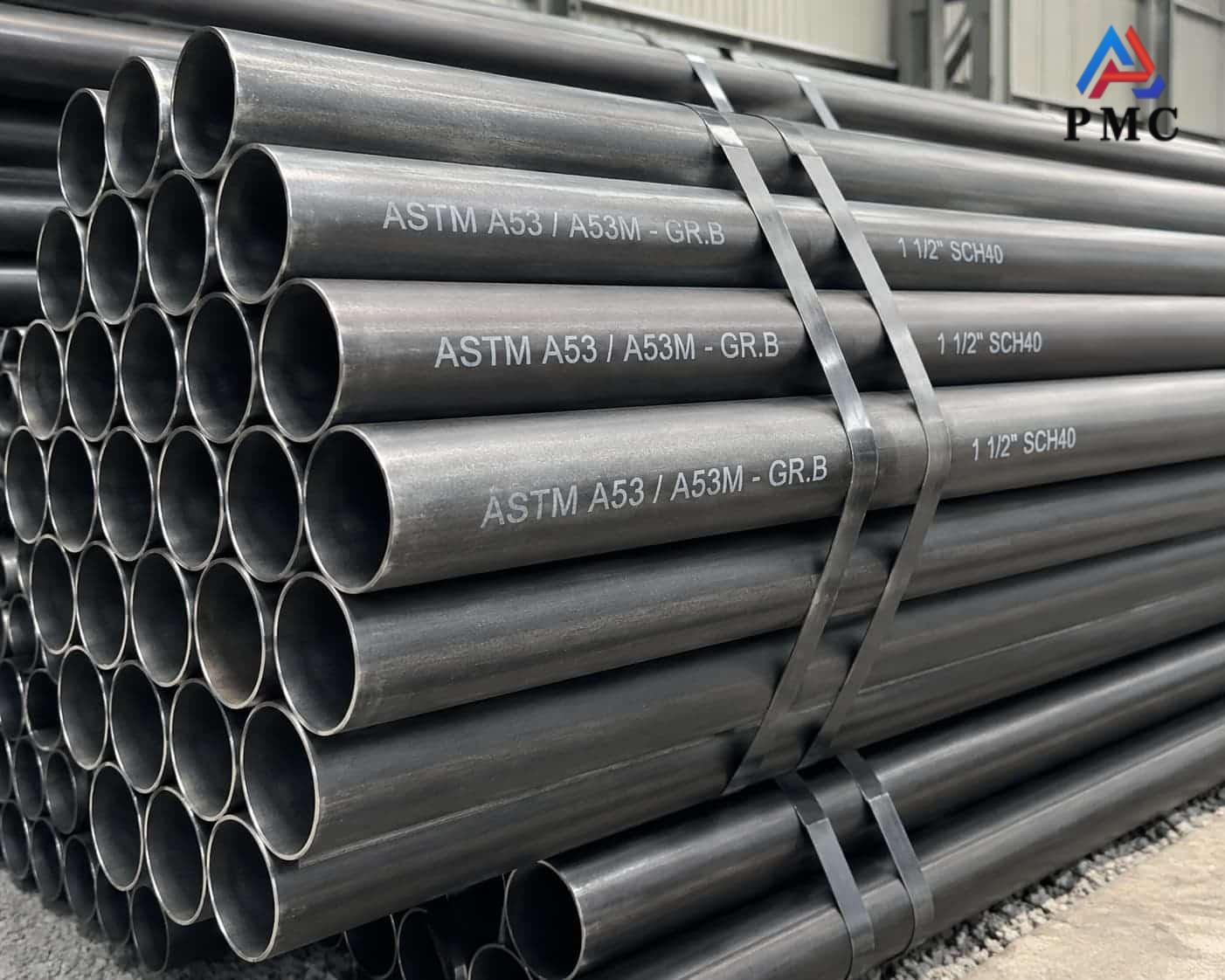
ASTM A53 pipe is a carbon steel pipe designed for general-purpose and low to medium pressure applications, including water, gas, and air transport.
It is widely used in structural and mechanical systems due to its strength, durability, and cost-effectiveness.
Types of ASTM A53 Steel Pipe:
ERW (Electric Resistance Welded)
ASTM A53 pipe is commonly selected for its versatility, reliable performance, and economical price, making it one of the most widely used carbon steel pipe standards.
Pipe size is a key factor in selecting ASTM A53 pipe, as it affects flow capacity, system efficiency, and pressure performance.
In pipe standards, NPS (Nominal Pipe Size) defines the pipe size, while the Outer Diameter (OD) remains fixed. The wall thickness (SCH 40 / SCH 80) determines strength and pressure resistance.
NPS is a standard size designation, OD is a fixed external measurement, and wall thickness controls how much pressure the pipe can handle.
Larger diameter = higher flow capacity and lower pressure loss
Thicker wall = higher pressure resistance and strength
Smaller diameter = better flow control in compact systems
Overall, selecting the right pipe size ensures a balance between flow efficiency, strength, and safety in industrial piping systems.
Pipe schedule refers to the wall thickness of a pipe, which directly affects its strength and pressure resistance.
|
Feature |
SCH 40 |
SCH 80 |
|
Wall Thickness |
Standard |
Thicker |
|
Strength |
Medium |
High |
|
Pressure |
Moderate |
High |
|
Application |
General use |
High pressure |
Use SCH 40 for standard, low to medium pressure applications
Use SCH 80 for high-pressure and heavy-duty systems
Overall, SCH 80 provides greater durability and pressure capacity, while SCH 40 is more cost-effective for general use.
|
Grade |
Strength |
Usage |
|
Grade A |
Lower |
Limited |
|
Grade B |
Higher |
Widely used |
Grade B offers higher tensile strength and better mechanical performance, making it more suitable for most piping systems, including structural and pressure applications.
Recommendation:
ASTM A53 Grade B is the preferred choice for most applications due to its higher strength, better durability, and wider usability in industrial systems.
Related: ASTM A53 Grade B ERW Pipe: Specifications, Size Chart & Properties
The manufacturing process of ASTM A53 pipe directly affects its strength, performance, and cost.
|
Type |
Advantages |
Use Case |
|
ERW |
Lower cost |
General applications |
|
Seamless |
Higher strength |
High pressure systems |
ERW pipes are produced by welding steel strips, making them more economical and widely used in standard piping systems. Seamless pipes are manufactured without a weld seam, offering better strength and reliability under high-pressure conditions.
ERW = cost-effective for general use
Seamless = higher strength for demanding applications
Overall, the choice depends on balancing cost efficiency and performance requirements.
ASTM A53 pipe should always be selected based on specific project requirements, including pressure level, structural demand, and operating environment.
Low-pressure systems → SCH 40 ERW pipe is commonly used for water, air, and general utility lines
High-pressure systems → SCH 80 seamless pipe is preferred for improved strength and safety
Structural applications → Grade B pipe is widely used due to its higher mechanical strength
Different combinations of grade, schedule, and manufacturing type determine overall performance and suitability.
Matching pipe specifications to the correct application is essential for ensuring safety, efficiency, and long-term reliability in piping systems.
This chart provides a fast overview of how to select ASTM A53 pipe based on common engineering requirements such as pressure level, structural demand, budget, and system criticality.
|
Requirement |
Recommended Option |
|
Low pressure systems |
SCH 40 |
|
High pressure systems |
SCH 80 |
|
Structural applications |
Grade B |
|
Budget projects |
ERW |
|
Critical systems |
Seamless |
Overall, selecting the right combination of schedule, grade, and manufacturing type is essential to ensure safety, performance, and cost efficiency in piping systems.
Selecting the wrong ASTM A53 pipe can lead to poor performance, safety risks, and higher long-term costs.
Common mistakes include:
Choosing based on price only, without considering performance requirements
Ignoring pressure and temperature conditions of the system
Selecting incorrect pipe size, leading to flow inefficiency or pressure loss
Not considering actual application environments (structural, fluid, or gas systems)
Proper evaluation of pressure, size, grade, and application type is essential to ensure safe and efficient pipe performance.
Q1: What is ASTM A53 pipe used for?
ASTM A53 pipe is used for fluid transport, structural applications, and low-pressure systems such as water, gas, and air pipelines.
Q2: How do I choose ASTM A53 pipe size?
Choose pipe size based on flow requirements, system pressure, and application type.
Q3: What is the difference between SCH 40 and SCH 80?
SCH 80 has a thicker wall and higher pressure resistance than SCH 40.
Q4: Which ASTM A53 grade is best?
Grade B is the most widely used due to its higher strength and better.
Q5: Is ASTM A53 suitable for high pressure?
ASTM A53 is suitable for moderate pressure. For high pressure or high temperature, ASTM A106 is recommended.
Choosing the right ASTM A53 pipe depends on a combination of key factors, including pipe size, schedule (wall thickness), grade, manufacturing method, and specific application requirements.
Use Grade B for most general and industrial applications due to its higher strength and reliability
Choose SCH 40 for standard, low to medium pressure systems
Choose SCH 80 for high-pressure and heavy-duty applications
Use ERW pipes for cost-effective solutions in general-purpose projects
Use Seamless pipes for critical systems requiring higher strength and safety
Proper selection of ASTM A53 pipe ensures improved system performance, higher operational safety, and better long-term cost efficiency.
To better understand ASTM A53 pipe and related standards, you may also find these guides useful:
ASTM A53 Pipe Weight Chart and Formula
Differences between ASTM A53 and ASTM A106 Steel Pipe
ATSM A53 Pipe vs API 5L Pipe: Key Differences & Applications
