


Cold drawing improves the dimensional accuracy, surface finish, and mechanical strength of seamless tubes. However, the cold deformation process also creates work hardening and residual stress inside the steel. Heat treatment is therefore required to restore ductility, relieve internal stress, and ensure stable mechanical properties.
Cold drawing can also create residual stress inside the tube. Due to uneven deformation between different areas of the material, internal stresses may remain after drawing. If these stresses are not properly relieved, they can lead to dimensional instability, machining difficulties, or reduced service performance. This is why heat treatment is usually carried out after cold drawing. It helps relieve residual stress, restore ductility, and ensure cold drawn seamless tubes achieve stable mechanical properties for their intended applications.
During the cold drawing process, seamless tubes undergo plastic deformation that improves dimensional accuracy and surface finish. However, this deformation also generates internal stress inside the steel. During subsequent heating and cooling, uneven temperature changes between the surface and core of the tube can create additional thermal stress, which may affect dimensional stability and mechanical performance.
The faster the cooling rate and the higher the carbon content or alloy composition of the steel, the greater the possibility of uneven deformation and residual stress formation. In addition, during heat treatment, phase changes in the steel structure may cause volume changes, creating structural stress inside the material.
If these stresses are not properly controlled, they may lead to dimensional changes, reduced toughness, or difficulties during further processing. Heat treatment helps balance these internal stresses by adjusting the microstructure of the steel and improving the overall performance of cold drawn seamless tubes.
a. Relieve Internal Stress
Heat treatment reduces the residual stress generated during cold drawing and cooling. This helps improve dimensional stability and reduces the risk of deformation during machining or service.
The cold drawing process increases strength and hardness but may reduce ductility. Heat treatment helps restore ductility, optimize hardness, and achieve a better balance between strength and toughness.
By refining the internal structure of the steel, heat treatment improves wear resistance, corrosion resistance, and overall reliability, allowing cold seamless drawn tubes to meet the requirements of precision machinery, hydraulic systems, automotive components, and other industrial applications.
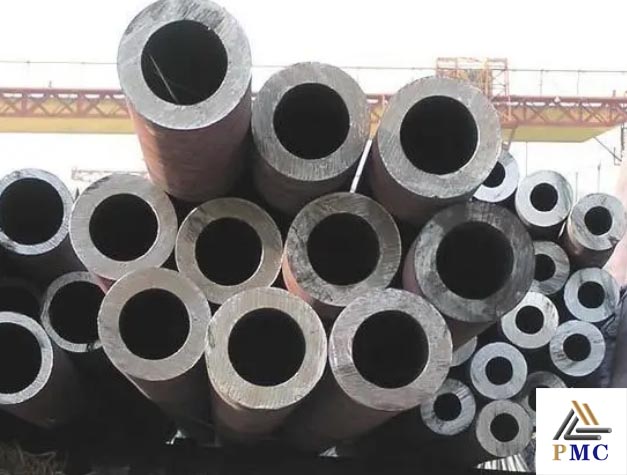
Different heat treatment methods are used for cold drawn seamless tubes depending on the required mechanical properties, application conditions, and material specifications. The main purpose of heat treatment is to reduce the effects of cold deformation, relieve internal stress, and achieve a better balance between strength, hardness, and ductility.
|
Property |
Before Heat Treatment |
After Heat Treatment |
|
Internal stress |
High due to cold deformation and uneven stress distribution |
Reduced to improve structural stability |
|
Ductility |
Lower because of work hardening |
Improved for better forming and processing |
|
Hardness |
Increased after cold drawing |
Controlled to achieve a better balance between hardness and toughness |
|
Machining performance |
More difficult due to higher hardness |
Improved for easier machining and further processing |
|
Dimensional stability |
More affected by residual stress |
Improved with better dimensional control |
This allows them to meet the requirements of precision applications where dimensional accuracy, reliability, and consistent performance are important.
Heat treatment requirements for cold drawn seamless tubes are specified by different international standards according to the intended application and required delivery condition. Instead of prescribing a single heat treatment process, most standards define the condition in which the tubes should be supplied to ensure they meet the specified mechanical and dimensional requirements.
Some commonly referenced standards include:
|
Standard |
Typical Application |
Common Delivery Condition |
|
ASTM A519 |
Mechanical tubing |
Annealed or Normalized |
|
ASTM A179 |
Heat exchanger tubes |
Annealed |
|
EN 10305 |
Precision steel tubes |
Annealed or Stress-Relieved |
Not necessarily. The required heat treatment depends on the steel grade, product standard, and intended application. Some tubes are supplied in an annealed, normalized, or stress-relieved condition, while others may be delivered according to specific customer or project requirements.
When properly controlled, heat treatment helps maintain dimensional stability rather than reducing accuracy. It also minimizes the risk of distortion during machining or long-term service.
The appropriate heat treatment condition should be selected based on the material specification, mechanical property requirements, and service environment. Referring to the applicable standard or consulting the tube manufacturer is the best way to ensure the correct choice.
Yes. Many heat-treated cold drawn seamless tubes are widely used in hydraulic systems, boilers, heat exchangers, precision machinery, and other applications that require consistent mechanical properties and reliable performance. The final selection should always comply with the relevant material standard and design requirements.
Cold drawing improves the strength and dimensional accuracy of seamless tubes, while heat treatment helps achieve the final mechanical properties required for service. The appropriate heat treatment condition should always be selected according to the applicable material standard and end-use requirements. Whether supplied for mechanical tubing, heat exchanger tubes, or precision applications, properly heat-treated cold drawn seamless tubes provide more consistent quality, stable performance, and reliable service life.
Related articles:
Applications of Cold Drawn Seamless Tubes
