


Cold drawn seamless tube cracking is one of the most common complaints we hear from buyers, and in almost every case it traces back to one of three things: the raw material, something that went wrong in the manufacturing process, or the conditions the tube was exposed to after it left the mill. We've grouped the causes below the way we actually diagnose them on the shop floor.
A lot of cold drawn seamless tube cracking starts before the tube is even drawn — it's already sitting in the billet.
Substandard or mismatched material. Sometimes the raw material simply doesn't meet spec, or the wrong grade gets substituted for a cheaper one. Either way, the hardness, strength, or toughness of the finished tube ends up short of what the application actually needs.
Excessive inclusions. Inclusions are non-metallic impurities left over from melting and casting. Once their size or volume goes beyond what a standard like ASTM E45 allows, they start acting as internal stress risers, and that's often where a crack initiates first.
Internal porosity (bubbles). Gas pockets or shrinkage cavities from casting weaken the material locally. Under drawing tension, these can turn into full cracks — we've seen this show up more often in lower-grade billet from suppliers who skip ultrasonic screening.
If you're sourcing critical-application tube, it's worth asking for mill certificates traceable to heat number and, for anything demanding, a UT scan on the incoming billet.
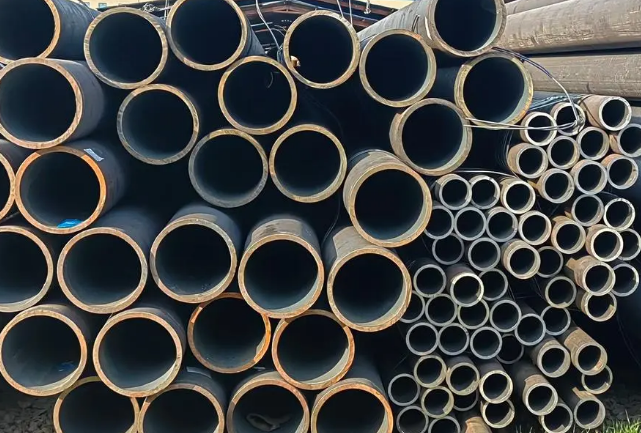
This is where the majority of preventable cracking actually comes from, and it's also where the gap between an experienced mill and a smaller trading operation shows up most.
Improper heat treatment control. Heat treatment is what sets the final mechanical properties of the tube, but plenty of smaller operations only go by heating time and temperature, without the testing equipment to confirm the tube actually hits the required hardness or tensile numbers for that specific grade and wall thickness. That's a gap we run into fairly often when reviewing failed tube from other suppliers.
Excessive cold-drawing reduction. Push the reduction per pass past what the grade and wall thickness can handle, and you build up more internal stress than the material can absorb. Sometimes it cracks right away; sometimes it cracks weeks later after it's already shipped, which makes the cause harder to trace back.
Poor control during the drawing pass itself. Uneven drawing speed, a misaligned die, or bad lubrication doesn't deform the tube evenly — it creates localized stress instead of spreading it out, and that's usually where the crack starts.
Straightening damage. Straightening is really a second deformation step — it applies bending force in both directions to correct camber. On thicker-wall tube especially, if the operator pushes too hard or doesn't have a feel for how much force the wall can take, it causes internal damage that often doesn't show up until later.
Inconsistent production parameters. Worn dies, weak cooling, no documented SOPs — this is the kind of thing that doesn't cause a crack every time, but it raises the odds significantly across a batch.
For buyers, asking a supplier what their heat-treatment testing actually looks like — not just "do you heat treat" but whether they test hardness and tensile per batch — tells you a lot about whether cracking risk has been engineered out or just assumed away.
Related articles: Manufacturing Process of Cold Drawn Steel Tube
Even a tube that left the mill in good shape can crack later if it ends up in the wrong environment or gets mishandled.
Temperature extremes. Harsh conditions — high heat, high humidity, or repeated wear — can bring on cracking over time. Low-temperature service is the bigger risk here: push a tube below its rated temperature and it can shift toward brittle behavior, which is a very different failure mode than what you'd see at room temperature.
Surface damage. A scratch or gouge on the surface is a stress riser waiting to happen. It doesn't take much for a crack to start right at that point and work its way in.
Improper fitting installation. Bad installation — clamps too tight, no allowance for expansion, that sort of thing — concentrates stress right at the connection point, and that's often where cracking shows up first in service, not out in the middle of a straight run.
Matching the tube's rated properties (Charpy impact data, if it's going into cold service) to the actual operating environment solves most of this before it ever becomes a field problem.
A: The two most frequent underlying causes are excessive work hardening from drawing without adequate intermediate annealing, and non-metallic inclusions in the raw material acting as stress risers under drawing tension.
A: Yes, cold drawn tubes carry a somewhat higher inherent cracking risk than hot rolled tube of the same grade, because the drawing process introduces additional residual stress through work hardening that hot rolling does not. That risk is well managed with proper process control — intermediate stress-relief annealing between passes and post-draw mechanical/NDT testing — which is why these steps matter more for cold drawn product than for hot rolled tube.
Related articles:
Common Defects and Causes of Cold Drawn Seamless Steel Tubes
Cold Drawn Seamless Steel Tube Defects: Repair or Reject?
How to Identify the Quality of Cold Drawn Seamless Steel Tubes?
Quality Control Points in Cold Drawn Seamless Tube Production
Cold Drawn Seamless Steel Tubes: What Affects Inner Surface Finish?
