What is Low Carbon Steel Welded Pipe?
Low carbon steel welded pipe is a steel pipe made from low-carbon steel (usually referring to steel with a carbon content ≤ 0.25%), produced by rolling steel strips or plates into shape and then welding them. Due to its good plasticity, toughness, and excellent weldability, low-carbon steel is very suitable as the base material for welded pipes.
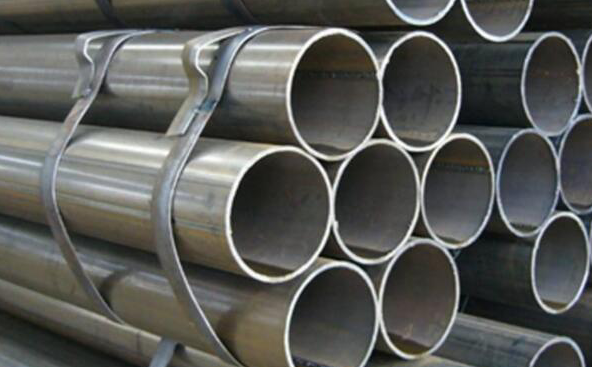
Characteristics of Low-Carbon Steel Welded Pipe:
Moderate Strength: The yield strength is approximately 185-415 MPa. Although not as high as high-carbon steel or alloy steel, it can meet the needs of most engineering projects through cold working or proper design.
Excellent Plasticity: High elongation, easy to bend and stamp.
Good Weldability: Less prone to defects such as cracks and porosity during welding, resulting in stable joint quality.
Low Cost: Raw materials are readily available, and the production process is mature.
Wide Application Range: Can be used in various fields such as low-pressure fluid transportation, structural support, construction, and petrochemicals.
Common Types and Processes:
The main production processes for low-carbon steel welded pipes include:
ERW (High-Frequency Resistance Welding): The most mainstream process, used for small and medium diameter pipes.
LSAW/SAWH (Submerged Arc Welding): Used for large diameter, thick-walled pipes, such as natural gas and oil pipelines.
Furnace Welding/Continuous Furnace Welding: An outdated process, now rarely used.
By Standard:
ASTM A53: American Standard Welded Steel Pipe
API 5L: Line Pipe
Applications:
Fluid Transportation: Tap water, sewage, gas, oil, natural gas, etc.
Structural Uses: Building frames, bridge components, machinery housings
Industrial Machinery Manufacturing: Automotive parts, agricultural machinery frames, conveyor rollers, guardrails
Energy Industry: Oil and gas field surface gathering and transmission pipelines
Furniture/Daily Necessities: Bed frames, shelves, clothes racks
Welding Precautions:
1. Pre-welding Cleaning: Remove oil, rust, and moisture to prevent porosity and cracks.
2. Welding Material Selection: Commonly used welding electrodes include E4303 (J422) and E4315 (J427), or H08A welding wire with HJ431 flux.
3. Thick Plates or Low-Temperature Environments: Preheating (100–150℃) is required. Low-hydrogen welding electrodes should be used, and interpass temperature should be controlled.
4. Avoid Narrow and Deep Welds: Especially when the carbon content of the base metal is close to the upper limit (0.25%), to prevent hot cracking.
Read more: Seamless Pipe vs Welded Pipe: What's the Difference?