Carbon composite steel pipes are a new type of pipe material with
carbon steel pipe as the base material and corrosion-resistant composite layers on both the inner and outer walls. They have been widely used in water supply systems in recent years.
What are Carbon Composite Steel Pipes?
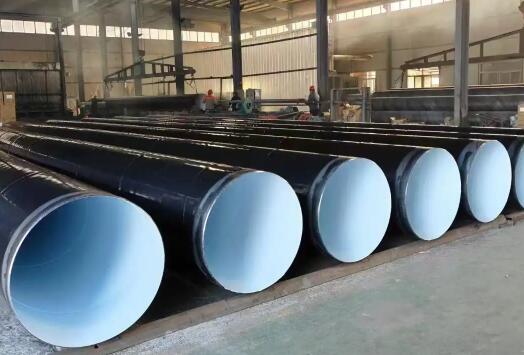
Carbon composite steel pipes consist of two layers: the base pipe is made of carbon steel, providing mechanical strength and pressure resistance; the inner wall is lined with a corrosion-resistant layer (such as epoxy resin, polyethylene, or stainless steel) to prevent water corrosion. The outer wall can be treated with appropriate anti-corrosion measures depending on whether it is buried or overhead.
●
ASTM A53 Grade B: The most commonly used carbon steel pipe standard, suitable for conveying fluids such as water, gas, and oil. It can be used for welding, bending, and other forming operations. Minimum yield strength 240MPa, minimum tensile strength 415MPa;
●
ASTM A106 Grade B: Seamless carbon steel pipe standard for high-temperature applications, suitable for high-temperature and high-pressure conditions. Minimum yield strength: 240 MPa; Minimum tensile strength: 415 MPa;
●ASTM A36: Structural carbon steel, suitable for large-diameter pipes with lower pressure requirements.
Common types include:
Epoxy-lined composite steel pipe: Inner wall coated with food-grade epoxy powder, suitable for drinking water transportation;
PE-lined composite steel pipe: Inner wall lined with polyethylene, offering good corrosion resistance;
Stainless steel-lined composite steel pipe: Inner wall lined with thin-walled stainless steel, offering excellent corrosion resistance, suitable for high-standard water quality requirements.
Key Features:
1. High Strength: The base pipe is made of carbon steel, with a pressure-bearing capacity far exceeding that of pure plastic pipes, making it suitable for high-pressure water supply systems.
2. Corrosion Resistance: The inner lining isolates water from the pipe wall, preventing rust and scaling, ensuring water quality.
3. Good Hydraulic Performance: Smooth inner wall, low frictional resistance, and low energy consumption for water delivery.
4. Easy Installation: Can be connected by welding, flanges, or grooves, ensuring reliable interfaces.
5. Long Service Life: Designed for up to 50 years, with low maintenance costs.
Main Application Scenarios:
Urban Water Supply: Main pipelines, secondary water supply pipelines
Industrial Water: Circulating water, process water pipes Applications:
Agricultural Irrigation: Backbone water supply pipelines, pump station outlet pipes
Fire Water Supply: Main fire pipelines
Advantages of Carbon Composite Steel Pipes for Water Supply Pipelines:
Corrosion Resistance: The inner lining completely solves the problem of carbon steel pipes being prone to rust, making it suitable for transporting drinking water;
High Strength: More suitable for high-pressure, large-diameter, and deep-buried scenarios than plastic pipes;
Fast Construction: Trenching connections are faster than welding and more adaptable than hot-melt connections;
Environmentally Friendly: The inner lining material meets drinking water hygiene standards, and the pipe material is recyclable;
Low Overall Cost: Although the initial investment is higher than PE pipes, the overall cost (including maintenance and replacement) is advantageous.
Precautions:
Inner Lining Integrity: Avoid damaging the inner lining during transportation and installation; protective measures must be taken during welding;
Joint Treatment: After welding or trenching connections, the inner lining at the joint needs to be repaired to prevent exposure of the base pipe;
Anti-corrosion Treatment: The outer wall of buried pipelines still needs
anti-corrosion treatment (such as 3PE, epoxy coal tar pitch), which cannot be omitted;
Water Quality Standards: When used for drinking water.
Frequently Asked Questions:
Q1: Are carbon composite steel pipes and plastic-coated steel pipes the same thing?
They are basically the same product. Plastic-coated steel pipes are a type of carbon composite steel pipe, with the inner wall coated with epoxy resin or polyethylene powder. The two are often used interchangeably in everyday language, but technically, "composite steel pipe" has a broader scope, also including types lined with stainless steel.
Q2: Can carbon composite steel pipes be used for hot water pipes?
Yes, but attention must be paid to the temperature resistance limitations of the inner lining material. Epoxy resin linings are generally suitable for temperatures not exceeding 80℃, polyethylene linings not exceeding 60℃, and stainless steel linings have no such limitation.
Q3: How much more expensive are they than PE pipes?
Taking DN200 as an example, the overall cost of carbon composite steel pipes is approximately 1.5-2 times that of PE pipes. However, in large-diameter (DN≥400) or high-pressure (≥1.6MPa) applications, PE pipes are insufficient, making carbon composite steel pipes a necessary choice.
Read more: Advantages and Disadvantages of Pipeline Transportation