


ASTM A53 welded steel pipe is a carbon steel pipe manufactured using electric resistance welding (ERW) and produced according to ASTM A53 standards. It is widely used for structural, mechanical, and low-pressure applications such as water, gas, and air transportation.
ASTM A53 pipe is known for its cost-effectiveness, uniform wall thickness, and strong performance in general engineering projects. Compared to seamless pipe, welded pipe offers a more economical solution for most standard applications.
|
Specification |
Details |
|
Standard |
ASTM A53 |
|
Manufacturing Type |
ERW (Electric Resistance Welded) |
|
Grades |
Grade A, Grade B |
|
Surface Finish |
Black, Hot-dip Galvanized |
|
Pipe Ends |
Plain End, Beveled End, Threaded |
|
Property |
Value |
|
Tensile Strength |
≥ 415 MPa |
|
Yield Strength |
≥ 240 MPa |
|
Parameter |
Details |
|
Product Type |
ASTM A53 Welded Steel Pipe |
|
Nominal Pipe Size (NPS) |
1/2" to 24" |
|
Outside Diameter (OD) |
Fixed for each NPS |
|
Size Availability |
Standard & custom sizes |
|
Schedule |
Wall Thickness Type |
Pressure Level |
Typical Applications |
|
SCH 10 |
Light Wall |
Low |
Low-pressure water, air, gas systems |
|
SCH 40 |
Standard |
Medium |
General piping, construction |
|
SCH 80 |
Thick Wall |
High |
High-pressure industrial applications |
|
Factor |
Effect on ASTM A53 Welded Steel Pipe |
|
Larger Diameter |
Increases flow capacity and pipe weight |
|
Thicker Wall |
Improves strength and pressure resistance |
|
Higher Schedule |
Enhances durability and load-bearing capacity |
The ASTM A53 standard divides welded steel pipes into two types: Type F and Type E. Type F is suitable for high-pressure systems, and type E is an electric welded pipe (ERW pipe), suitable for low-pressure systems. Both types of pipe require heat treatment to ensure that their mechanical properties and chemical composition meet standard requirements.
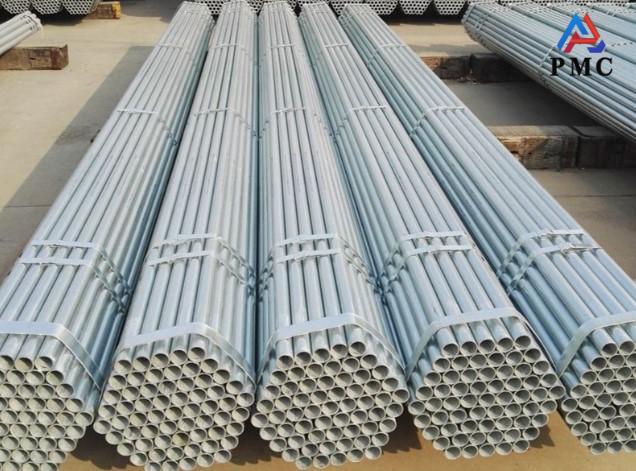
The welded pipes under ASTM A53 are produced by heating steel and then forming it into a tubular shape. The edges are welded together using either an electric-resistance weld (ERW) or furnace-butt welding process.
ASTM A53 welded pipe is typically manufactured using the ERW process:
Steel coil is uncoiled and leveled
Formed into a cylindrical shape
Edges are heated using electrical resistance
Seam is welded longitudinally
Pipe is cooled, sized, and tested
This process ensures consistent quality, smooth surface finish, and efficient production.
1. Water and Gas Lines: Commonly used for transporting water, gas, and other fluids.
2. Structural Purposes: Used in construction for structural supports, columns, and other load-bearing applications.
3. Steam and Air Piping: Suitable for low-pressure steam, air, and other gases.
4. Industrial Uses: Applied in various industrial settings for conveying fluids and chemicals.
5. Fire Sprinkler Systems: Used in the distribution of water in fire suppression systems.
Its uniform wall thickness and efficient ERW manufacturing process ensure consistent quality and stable performance in everyday use.
Compared to seamless pipe, ASTM A53 welded pipe offers better affordability while still providing sufficient strength for most general applications. In particular, Grade B is widely preferred for its balanced mechanical properties and versatility.
Q: What is ASTM A53 welded steel pipe used for?
ASTM A53 welded steel pipe is used for construction, water transport, gas pipelines, and mechanical systems.
Q: What is the difference between ASTM A53 welded and seamless pipe?
Welded pipe is manufactured with a seam and is more affordable, while seamless pipe has no seam and is better for high-pressure applications.
Q: What is the most common ASTM A53 pipe grade?
Grade B is the most widely used due to its higher strength and versatility.
Q: What sizes are available for ASTM A53 pipe?
ASTM A53 pipe is typically available from 1/2 inch to 24 inches in diameter, with multiple wall thickness options.
To better understand ASTM A53 pipe and related standards, you may also find these guides useful:
