


What are the specifications of 304 stainless steel pipe? In short, 304 stainless steel pipe specifications cover the material grade, the governing standards, the size and outside diameter, the wall thickness/schedule, the pipe type (seamless or welded), the length, and the end finish. Together, these details define how a 304 stainless steel pipe is ordered, manufactured, and used across industrial projects.
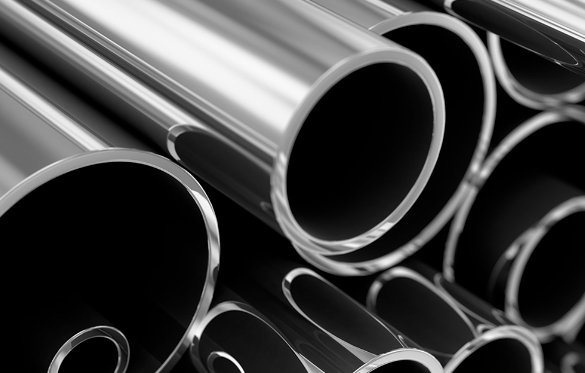
Stainless steel pipes are long, hollow tubes used in a wide variety of applications, manufactured in two ways: welded pipes and seamless pipes. SS 304 pipe is a metal pipe made of austenitic stainless steel (UNS S30400), with a composition of roughly 18% chromium and 8% nickel, and is widely used in food production equipment, chemical equipment, nuclear energy, and more. Size ranges are produced under ASTM A312 and A358 specifications, meeting ASTM, ASME and API standards, with welded SS 304 pipe and electric fusion welded (EFW) pipe both available.
|
Item |
Details |
|
Material |
304 austenitic stainless steel, UNS S30400 (approx. 18% Cr, 8% Ni) |
|
Standards |
ASTM A312 / ASME SA312, ASTM A358 / ASME SA358 |
|
Dimensions |
ASTM, ASME and API |
|
Seamless 304 Pipes |
1/2″ NB – 16″ NB |
|
ERW 304 Pipes |
1/2″ NB – 24″ NB |
|
EFW 304 Pipes |
6″ NB – 100″ NB |
|
Specialized in |
Large Diameter Size |
|
Schedule |
SCH20, SCH30, SCH40, STD, XS, SCH60, SCH80, SCH120, SCH140, SCH160, XXS |
|
Type |
Seamless / ERW / Welded / Fabricated / LSAW Pipes |
|
Form |
Round, Square, Rectangular, Hydraulic Etc |
|
Length |
Single Random, Double Random & Cut Length |
|
End |
Plain End, Beveled End, Threaded |
Size is expressed as NB (Nominal Bore, also referred to as NPS – Nominal Pipe Size), a labeling convention rather than an exact measurement — an NB 2″ pipe, for example, does not measure exactly 2 inches at any point. Each NB size corresponds to a fixed outside diameter (OD) that stays the same across every schedule for that size; only the wall thickness changes as the schedule number increases, from SCH20 up through SCH160 or XXS. A higher schedule number means a thicker wall and a smaller inside diameter for the same outside diameter — this raises the pipe's pressure rating but reduces its internal flow area, so schedule selection is normally driven by the pressure and flow requirements of the application rather than by size alone. For smaller NB sizes the OD is a rounded, standardized value, while for NB 14″ and larger the OD generally equals the nominal size in inches, a convention common across ASME dimensional standards. Because exact wall thickness depends on both the size and the schedule selected, figures should be confirmed against the applicable dimensional standard or the supplier's specification sheet before ordering.
304 and 316 are both austenitic stainless steels, but 316 adds molybdenum, giving it stronger resistance to chlorides and pitting corrosion in marine, offshore, and aggressive chemical environments. 304 stainless steel pipe performs well in general corrosive conditions such as food processing, fresh water, and standard chemical handling, and is typically more cost-effective than 316. For applications involving saltwater, high chloride exposure, or stricter corrosion resistance requirements, 316 stainless steel pipe is usually the better choice; for most general industrial, architectural, and food-grade uses, 304 stainless steel pipe is a proven, economical option.
Related articles:
304 and 316 Stainless Steel Pipes, Which One is Better?
Should I Choose 304 Or 316 Stainless Steel for Bathroom?
Corrosion Resistance: 304 stainless steel is resistant to most corrosive environments, including those involving chemicals, fresh water, and food processing.
Temperature Resistance: It performs well in both high and low-temperature environments, maintaining strength and integrity.
Weldability: 304 stainless steel is easily weldable, making it suitable for a wide range of fabrication methods.
Strength: It offers good tensile strength and is durable for various mechanical applications.
Food and Beverage Industry: Often used in equipment and piping for food processing and brewing due to its hygienic properties.
Chemical Processing: Used in chemical plants due to its resistance to various chemicals.
Pharmaceutical Industry: Commonly used in manufacturing equipment and piping where cleanliness is critical.
Water and Plumbing: Suitable for potable water lines and general plumbing systems thanks to its corrosion resistance.
Architecture and Construction: Used in structural applications, handrails, and piping due to its aesthetic and corrosion-resistant properties.
What is the standard for 304 stainless steel pipe?
It is commonly produced to ASTM A312 / ASME SA312 for seamless and welded pipe, and ASTM A358 / ASME SA358 for large-diameter electric fusion welded (EFW) pipe. These standards define chemical composition, mechanical properties, and dimensional tolerances.
What sizes are available for 304 stainless steel pipe?
Size availability depends on the manufacturing method, starting from about 1/8″ NB. Seamless pipe typically ranges up to 16″ NB, ERW pipe up to 24″ NB, and EFW pipe covers large diameters up to 100″ NB. Check with the supplier for the exact size range of a given type.
What is the difference between 304 seamless and welded pipe?
Seamless 304 pipe is extruded or drawn from a solid billet with no weld seam, offering uniform strength in all directions. Welded pipe (ERW or EFW) is formed from plate or coil and welded along a seam, which is generally more economical, especially in larger diameters.
What schedule is commonly used for 304 stainless steel pipe?
Common schedules include SCH20, SCH40, SCH80, and STD/XS, with heavier schedules such as SCH140, SCH160 and XXS used for higher-pressure applications. The right schedule depends on the required pressure rating and service conditions.
About Permanent Steel Manufacturing Co., Ltd(PMC)
Permanent Steel Manufacturing Co., Ltd. has been manufacturing carbon steel, stainless steel, and alloy steel pipe since 2000, with production bases in Shandong and Tianjin. Our products are manufactured to ASTM, ASME, API, EN, BS, DIN and JIS standards, and our quality management system is certified to ISO 9001. Learn more about our certifications or contact our team for technical support on 304 stainless steel pipe selection.
Read more:
Application of 304 Stainless Steel Pipe
Stainless Steel Pipe Dimensions and Weight Chart
Stainless Steel Pipe Schedule Chart
Stainless Steel Pipe Pressure Rating
