


A seamless pipe is a steel pipe whose body has no welded seam. It is typically made from a solid round billet that is pierced and then rolled, drawn, or extruded into a hollow shape. A welded pipe, by contrast, is formed from plate or strip and joined along a weld seam. This is a difference in construction, not a ranking: neither type is automatically stronger or better than the other.
By production method: hot-rolled, cold-rolled, cold-drawn, and extruded seamless pipe.
By cross-section: round pipe, which is the most common, and special-shaped pipe such as square, oval, or hexagonal sections.
By wall thickness: thick-walled and thin-walled seamless pipe.
Seamless steel pipes are hollow sections used to convey fluids such as oil, gas, and water, and to make structural and mechanical parts. Round pipe is the most common shape because it handles internal or external radial pressure even. Square and rectangular pipes are often chosen for frameworks where plane bending matters.
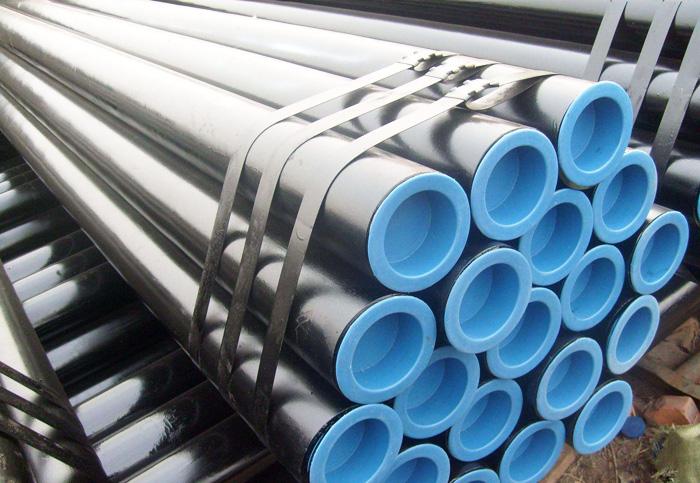
“Seamless” describes the form of manufacture, and only that: the pipe body has no welded seam along its length. It says nothing about the material grade, pressure rating, or overall quality. A seamless pipe is not automatically defect-free, and it still needs inspection and testing like any other pipe product. Whether a pipe suits a given job depends on its material, dimensions, applicable standard, manufacturing quality, and inspection requirements, not on the word “seamless” alone.
“Seamless pipe” is only one part of a product description, not a complete specification. “Seamless pipe” states the manufacturing form only. “Carbon steel seamless pipe” adds the material category. “ASTM A106 seamless pipe” points to a product standard, but the standard edition, size range, and purchase requirements must still be confirmed. When ordering, also check the grade, outside diameter, wall thickness, length, and inspection requirements. For a fuller checklist, see how to specify seamless steel pipe in an RFQ.
Note: ASTM/ASME A53/SA53 covers both seamless and welded pipe, so a standard name alone does not tell you the manufacturing type.
It is a manufacturing type. Material grade and product standard are specified separately.
Related articles:
Advantages and Disadvantages of Seamless Steel Pipe
