Building structures bear all forces, including the building's own weight, human activity, wind loads, and seismic forces. As a critical load-bearing component, the quality of seamless carbon steel pipes directly determines whether the structure can safely serve its design life.
Common quality standards for seamless carbon steel pipes in construction include:
ASTM A500: The most core and universal standard for seamless (and welded) carbon steel pipes in the American steel structure industry. It is divided into different grades (A, B, C, and D) based on the minimum yield strength. Among them, ASTM A500 Grade B is the most commonly used due to its excellent comprehensive performance, corresponding to China's Q355 grade and the corresponding EU standard EN 10210-1.
Scope of application: Circular, square, and rectangular cross-section steel pipes specifically used for manufacturing load-bearing structural components such as buildings and bridges. It comprehensively specifies the mechanical properties, chemical properties, and dimensional tolerance requirements for structural components.
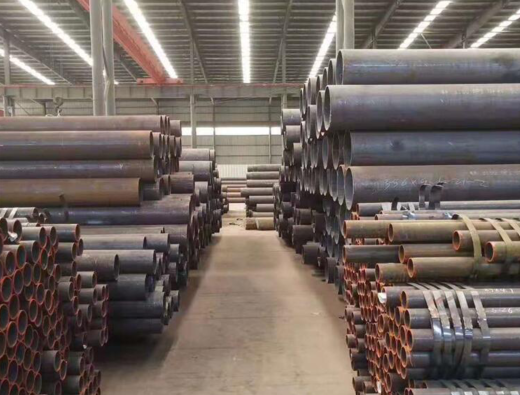
ASTM A53: General-purpose carbon steel piping, used for fluid transportation, low-pressure systems, and mechanical applications. Its primary purpose is not as a main load-bearing structural component; using it in a main load-bearing structure is high-risk and does not comply with mainstream practices in the American Institute of Steel Construction (AISC) standards. It can only be used for secondary supports, scaffolding, etc.
ASTM A106: High-temperature pressure piping (e.g., steam). Its chemical composition and properties are optimized for high-temperature environments and are not suitable for conventional building structures.
The main quality indicators of seamless carbon steel pipes for construction are:
1. Chemical Composition
The foundation determining the mechanical properties and weldability of steel. Standards have clear upper limits for elements such as carbon (C), silicon (Si), manganese (Mn), phosphorus (P), and sulfur (S). Phosphorus and sulfur are considered harmful elements, and their content is strictly controlled to improve toughness.
2. Mechanical Properties:
Yield Strength: The ability of a structure to resist plastic deformation, directly based on design calculations.
Tensile Strength: The ultimate load-bearing capacity of a material.
Elongation after Fracture: Reflects the plasticity of the material and is crucial for the seismic and impact resistance of the structure.
Impact Energy: A key indicator measuring the material's resistance to brittle fracture in low-temperature environments.
3. Geometric Dimensions and Tolerances
Outer Diameter and Wall Thickness: Permissible deviations must comply with standard specifications, directly affecting the mechanical calculations of the cross-section and connection construction.
Out-of-roundness and Curvature: Excessive out-of-roundness or curvature will affect the stability and appearance of the component.
4. Technological Performance and Surface Quality:
Flattening Test, Bending Test, Flaring Test: These tests verify the plastic deformation resistance of the carbon steel seamless pipe, simulating the processing and installation process.
Surface Quality: The inner and outer surfaces of the steel pipe must be free from visually visible cracks, folds, scabs, delamination, and other harmful defects. Minor scratches and straightening marks with a depth not exceeding the negative deviation are permissible.
5. Non-Destructive Testing
For structural applications with higher requirements, standards or design documents may specify eddy current testing, ultrasonic testing, or radiographic testing to detect minute internal or surface defects.
Key Points for Quality Inspection:
1. The procurement documents must clearly specify: ASTM A500, Grade B (or other grade), Seamless.
2. Manufacturers must be required to provide a Material Certificate (MTC) conforming to ASTM standards, including furnace number, chemical composition, and mechanical property test results.
3. Steel pipes should have clear markings or labels indicating the standard number, grade, dimensions, and manufacturer to ensure on-site material traceability.
4. Depending on project specifications, third-party witnessed sampling and retesting may be required.