In the field of building structural support,
seamless steel pipes have become an important material choice due to their unique performance advantages. Compared with traditional
welded steel pipes, seamless steel pipes are manufactured through hot rolling or cold drawing processes, resulting in a uniform, seamless structure that effectively avoids stress concentration problems that may occur at weld seams.
The strength performance of seamless steel pipes is particularly outstanding. Due to the absence of weld defects, their tensile and compressive strengths are more stable, making them especially suitable for bearing complex load conditions in building structures. For example, in high-rise building frames and large-span stadium roofs, seamless steel pipes can provide reliable support.
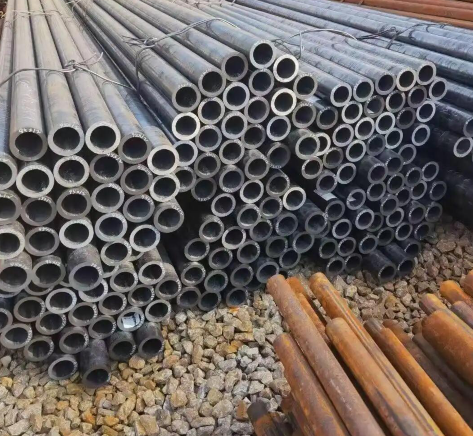
Material Strength Properties:
This is the starting point for selecting seamless steel pipes, mainly reflected in:
a. Yield Strength: This is the most important indicator. It refers to the stress value at which the material begins to undergo significant plastic deformation. Structural design usually uses this as the basis for allowable stress. Commonly used grades include Q235B (yield strength ≥ 235 MPa) and Q355B (yield strength ≥ 355 MPa).
b. Tensile Strength: The maximum stress a material can withstand before fracture. It represents the material's strength reserve. The ratio of yield strength to tensile strength (yield-to-tensile strength ratio) is also an important parameter; too low a ratio results in poor safety, while too high a ratio indicates insufficient plastic deformation capacity.
c. Elongation: Reflects the material's plastic deformation capacity and is crucial for structural earthquake resistance and resistance to unexpected overloads.
From a material properties perspective, seamless steel pipes also have the following advantages:
Regular cross-sectional shape and high dimensional accuracy
Smooth inner and outer surfaces, facilitating corrosion protection
Good material uniformity and stable mechanical properties
In practical engineering applications, the selection of seamless steel pipes requires consideration of several factors.
First, the ratio of wall thickness to diameter directly affects its load-bearing capacity; second, the material grade, as different grades of seamless steel pipes are suitable for different strength support requirements; finally, appropriate surface treatment processes must be selected in conjunction with environmental factors.
It is worth noting that the installation process of seamless steel pipes in building structures also has special requirements. Since there are no welds, the connection method often uses flanges or threaded joints, which requires special attention to the butt joint accuracy during construction. Meanwhile, the cutting and processing of seamless steel pipes requires specialized equipment to ensure the flatness of the end faces.
With the development of construction technology, the application of seamless steel pipes in structural support is constantly innovating. In some new building systems, designers utilize the plasticity of seamless steel pipes to create spatial structures that are both aesthetically pleasing and stable. This fully demonstrates that seamless steel pipes can meet strength requirements while also adapting to the diverse needs of modern architecture.
In general, seamless steel pipes, with their excellent mechanical properties and reliable quality, have become an important choice in the field of building structural support. When selecting seamless steel pipes, engineers should comprehensively consider material characteristics, construction conditions, and cost factors based on specific project requirements to fully leverage their technical advantages.