


In industrial production, scenarios requiring operation in low-temperature environments are frequently encountered. Examples include the storage and transportation of liquefied natural gas, certain chemical processes, and low-temperature physics experimental devices. These applications place special demands on material properties, especially on pipeline systems transporting fluids or gases. Ordinary steel pipes become brittle at low temperatures, easily breaking and posing safety hazards. Steel pipes capable of withstanding low-temperature conditions have emerged, and their processing, particularly achieving a "seamless" form, is a professional topic worthy of exploration.
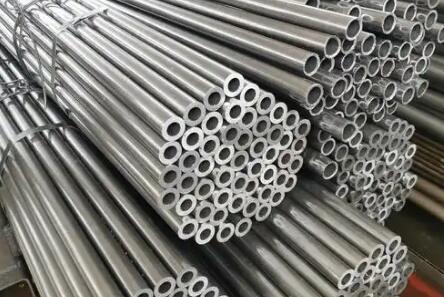
Low-temperature seamless steel pipes refer to pipes manufactured using specific processes without weld seams, specifically designed for low-temperature conditions. They differ from the water or gas pipes we see in daily life, which mostly have a weld seam running from beginning to end. While this weld seam is not a problem at room temperature, at extremely low temperatures, it often becomes the weakest link in the structure, easily becoming a crack initiation point. The seamless structure avoids this potential risk, thereby improving overall reliability and safety in low-temperature environments. Seamless steel pipes used in cryogenic applications must simultaneously meet two conditions: seamless forming process and cryogenic material grade (such as ASTM A333 Gr.6).
1. Billet Preparation and Inspection
The first high-quality step in processing is selecting suitable billets. Specific brands of steel are typically used, carefully smelted with strictly proportioned chemical compositions to ensure good toughness at low temperatures. Before use, the billets undergo a series of inspections to ensure strict control of internal inclusions and that the composition meets requirements.
2. Piercing and Rolling
This is the core step in achieving the "seamless" characteristic. Solid round steel billets are heated to a ductile state and then fed into a piercing mill. A specially designed mandrel, under immense pressure, extrudes a hole in the center of the solid billet, forming a hollow capillary tube. This process is somewhat like blowing sugar figurines, but uses enormous mechanical force and high-temperature metal. Subsequently, the tube blank is fed to a tube rolling mill, where, through the extrusion of the rolls, its wall thickness is further reduced, its diameter is increased, its length is extended, and its internal structure becomes denser and more uniform.
3. Sizing and Heat Treatment
After rolling, the dimensional accuracy and surface finish of the tube blank may not yet meet the final requirements. At this point, it enters a sizing mill, where it is precisely calibrated to the predetermined outer diameter and wall thickness through a series of annular dies. Next comes the crucial heat treatment stage. The steel tube is heated to a specific temperature and held for a period of time, then cooled at a controlled rate. Depending on the steel grade and standard requirements, "normalizing" or "quenching + tempering" is typically used. This is key to ensuring that the steel tube does not become brittle in environments with temperatures tens of degrees below zero or even hundreds of degrees Celsius.
4. Finishing and Inspection
After heat treatment, the steel pipes need to be straightened to ensure their straightness. Then, they are cut to the length required by the customer. Before leaving the factory, each seamless cryogenic steel pipe undergoes a variety of rigorous tests. This includes non-destructive testing, such as ultrasonic testing, to detect any micro-cracks or inclusions that may exist inside or outside the pipe; it also includes mechanical property testing, taking samples from the steel pipe and testing its impact energy in a laboratory simulating a cryogenic environment to ensure its toughness meets standards; dimensional accuracy, surface quality, and chemical composition are also mandatory inspection items.
The processing of seamless cryogenic steel pipes integrates multiple technologies from metallurgy, materials science, and mechanical engineering. It's not about pursuing novelty, but rather a natural product of the ever-increasing demands for safety and reliability in industrial development. From the initial selection of raw materials to the rigorous inspection of the final product, every step embodies meticulous attention to detail and adherence to standards. It is this focus on quality that enables seamless cryogenic steel pipes to silently support the stable operation of modern industry in those unseen, frigid corners. With continuous technological advancements, its processing technology will continue to be optimized to meet even more demanding application requirements in the future.
Read more: Low Temperature Carbon Steel Pipe
