


Everything begins with a solid round steel billet, usually made of high-quality carbon steel or alloy steel. The first high-quality step is to send these billets into a heating furnace for uniform heating. This step is crucial, and temperature control is key. The goal of heating is to bring the billet to an "austenitic" state, which possesses excellent plasticity; typically, the temperature needs to reach above 1200 degrees Celsius. Uniform heating is essential; otherwise, subsequent rolling will result in uneven internal stress and wall thickness deviations.
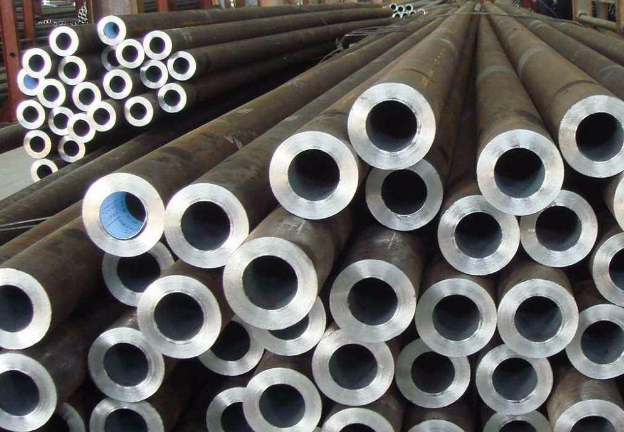
After hot deformation, the steel pipe is sent to a cooling bed for cooling. The cooling method (e.g., air cooling, controlled cooling) affects its final metallographic structure and mechanical properties. Cooled pipes inevitably have some bending, requiring precise straightening by a straightening machine to ensure straightness. Each steel pipe undergoes rigorous testing, including dimensional measurement, visual inspection of surface quality, non-destructive testing (such as ultrasonic and eddy current testing), and necessary mechanical property tests, to ensure that it fully meets the standard requirements.
Strategies for Achieving High-Efficiency Production:
1. Optimization and Intelligent Control of Process Parameters
The hot rolling process involves numerous parameters: heating temperature, rolling speed of each stand, roll gap settings, tension control, etc. Traditional experience-based adjustments are gradually being replaced by intelligent control based on data models. By establishing a big data model of the process, the system can automatically optimize parameter settings, reduce trial-and-error costs, stabilize product quality, and reduce energy consumption. For example, a precise heating temperature model ensures smooth piercing while avoiding energy waste.
2. Predictive Maintenance of Equipment Conditions
Hot rolling equipment operates under harsh conditions of high temperature and high load. Sudden failures can lead to complete line shutdowns and significant losses. Implementing predictive maintenance strategies is crucial. By monitoring key equipment (such as roll bearings and main motors) online for vibration, temperature, and current signals, and using data analysis to predict their health status, unplanned downtime can be minimized, ensuring production continuity and rhythm.
3. Improving Continuous Casting Billet Quality and Hot Charging/Delivery
The quality of the billet used in seamless steel pipe production is paramount. Adopting pure steel smelting technology and optimizing the continuous casting process to obtain continuously cast round billets with uniform internal structure and fewer defects can significantly reduce subsequent rolling defects and scrap rates. Promoting hot charging and delivery technology for continuously cast billets, directly feeding high-temperature billets into the heating furnace, can significantly save heating energy consumption and shorten the production cycle, making it a crucial part of green and efficient production.
4. Refined and Information-Based Management of the Production Process
From order placement to finished product warehousing, the entire process is tracked and managed through information technology. Using tools such as MES (Manufacturing Execution System), the location, process status, and quality data of each batch of billets and each steel pipe on the production line can be monitored in real time. This not only enables rapid production scheduling and flexible response to order changes, but also allows for precise traceability and analysis in case of quality issues, facilitating continuous process improvement.
