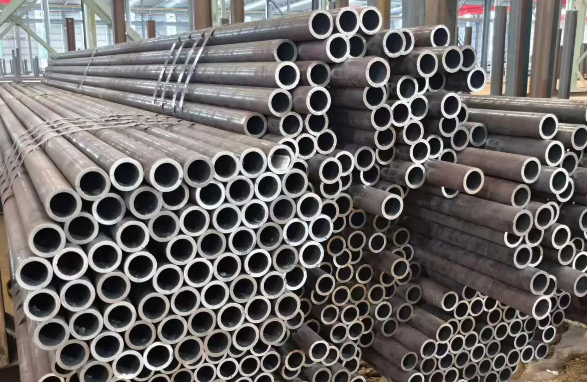
Seamless steel pipes are an important industrial material, widely used in petroleum, natural gas, chemical, and aerospace industries. However, with increasing awareness of environmental protection and quality safety, whether seamless steel pipe production is subject to policy restrictions has become a focus of attention.
The Impact of Environmental Policies on Seamless Steel Pipe Production:
As environmental issues become increasingly prominent, countries worldwide have strengthened environmental protection requirements for industrial production. As a high-energy-consuming and high-emission industry, seamless steel pipe production is naturally subject to environmental policy restrictions.
In China, the government has implemented a series of environmental policies, including restricting the elimination of high-energy-consuming and high-polluting production capacity and strengthening enterprise environmental governance and emission standards. These policies impose stricter environmental requirements on seamless steel pipe manufacturers, forcing them to increase environmental investment, improve production processes, and reduce pollution emissions.
Similar environmental policies exist in other countries and regions. For example, the European Union has very strict emission standards for industrial enterprises, and its environmental requirements for seamless steel pipe manufacturers are also high.
The Impact of Quality and Safety Policies on Seamless Steel Pipe Production:
As an important industrial material, the quality and safety of seamless steel pipes directly affect the safe and reliable operation of related industries. Therefore, all countries have strengthened quality and safety supervision of seamless steel pipe production.
In China, the government has implemented a series of quality and safety policies, including strengthening requirements for enterprise quality management systems, raising product quality standards, and strengthening supervision and inspection of seamless steel pipe manufacturers. These policies aim to ensure the quality and safety of seamless steel pipe products and improve the overall competitiveness of the industry.
Similar quality and safety policies exist in other countries and regions. For example, the United States has very strict quality requirements for seamless steel pipe products, and its testing and certification requirements are also high.
The Impact of Policy Restrictions on Seamless Steel Pipe Production:
The implementation of environmental protection and quality and safety policies undoubtedly brings certain pressures and challenges to seamless steel pipe manufacturers. On the one hand, companies need to increase investment in environmental protection and quality management, and improve production processes and technologies to meet policy requirements; on the other hand, the implementation of policies also prompts the elimination of non-compliant companies in the industry, making market competition more intense.
However, policy restrictions also bring opportunities to seamless steel pipe production. By increasing investment in environmental protection and quality and safety, improving production processes and technologies, and enhancing product quality and competitiveness, companies can gain more market share and profits.
In conclusion, while
seamless steel pipe production is constrained by environmental and quality safety policies, these policies also prompt companies to increase investment in environmental protection and quality, and improve their technology and competitiveness. Through compliant production, companies can gain more opportunities and market share. Therefore, policy restrictions present both challenges and opportunities for seamless steel pipe manufacturers.