With the continuous advancement of
ERW pipe technology, its application range is becoming increasingly widespread. This type of steel pipe utilizes the skin effect and proximity effect of electric current to rapidly heat the edges of the pipe blank to a suitable welding temperature, and then is manufactured through an extrusion welding process. Unlike
seamless pipes, the performance of ERW pipes largely depends on the quality of the weld.
Factors Affecting ERW Pipe Weld Quality:
1. Influence of Raw Material Quality
The chemical composition, inclusions, banded structures, camber, and edge burrs of the raw materials all directly affect the weld quality. Excessive inclusions tend to accumulate in the heat-affected zone of the weld, forming crack initiation points and leading to weld cracking. Simultaneously, severe camber and edge burrs can cause misalignment, difficulty in arc initiation, weld displacement, and difficulty in removing inclusions, among other adverse consequences.
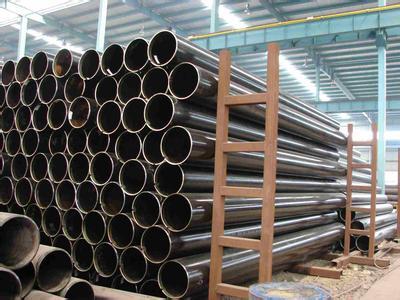
Permanent Steel Manufacturing Co.,Ltd strictly controls the source of raw materials, establishing direct supply relationships with large steel mills such as Shougang and Jinan Steel. This ensures that raw materials undergo rigorous chemical analysis, mechanical property testing, and surface defect inspection; only qualified raw materials are allowed into the warehouse for use.
2. Influence of Welding Process
a. High-Frequency Welding Process Parameters
Welding temperature, speed, extrusion amount, and opening angle are key factors affecting weld quality:
●Welding Temperature: Excessive temperature may lead to flattened welds or overheating; insufficient temperature may result in incomplete fusion.
●Welding Speed: Must be matched with the input power. While ensuring sufficient fusion, appropriately increasing the speed helps improve efficiency, but excessive speed can easily lead to incomplete fusion, while excessively slow speed may cause overheating.
●Extrusion Amount: Should be determined according to pipe diameter and wall thickness, typically 0.5-1.5 times the wall thickness. For thick-walled pipes (≥10mm), the upper limit can be appropriately used.
●Opening Angle: Needs to be adjusted accordingly based on pipe diameter and wall thickness, generally controlled between 4° and 8°.
b. Welding Stability and Quality Control
The stability of high-frequency welding is crucial to weld quality. Excessive impurities or burrs on the plate edges during welding can cause momentary short circuits and arcing at the high frequency, leading to defects such as localized cold welding. To prevent such problems, regular checks are necessary: the stability of the high-frequency coil installation, the filtration of the coolant, the appropriateness of the weld opening angle, and the removal of burrs from the plate edges. Simultaneously, enhanced water pressure and ultrasonic testing are indispensable.
3. The Impact of Heat Treatment Processes on Welds
Heat treatment processes also significantly impact weld quality. Online medium-frequency weld heat treatment is a common method. The length of the air cooling section from medium-frequency heating to water cooling is often overlooked, but it directly affects the phase transformation process of the weld. Excessively high weld temperatures before entering the cooling water (entry water temperature) can lead to insufficient cooling and grain coarsening; excessively low entry water temperatures may result in hardened structures. Therefore, when determining the length of the air cooling section, the production line speed must be comprehensively considered to ensure a uniform and fine microstructure.