Applications and Advantages of Seamless Low-Alloy Square Tubes:
Seamless low-alloy square tubes, long strips of steel with a hollow cross-section and no seams, are widely used in various fields. Their unique structure allows for a lighter weight compared to solid steel materials like round steel, while maintaining the same bending and torsional strength, making them an economical and efficient steel choice. This is because the hollow cross-section distributes material away from the neutral axis, achieving a larger moment of inertia with less steel, significantly improving material utilization efficiency.
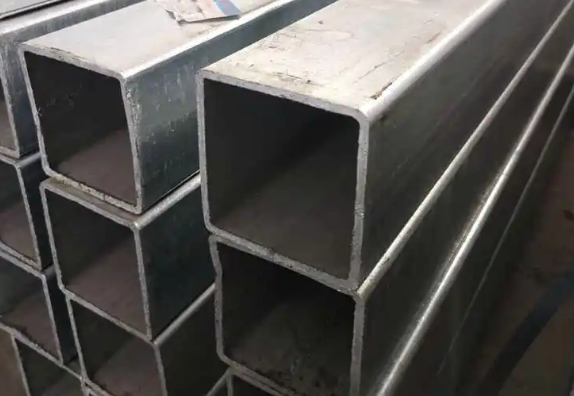
In practical applications, seamless low-alloy square tubes are often used to manufacture structural components and mechanical parts, such as oil drill pipes, automobile drive shafts, bicycle frames, and steel scaffolding in construction. Furthermore, low-alloy square tubes play an important role in bridge construction, hoisting machinery, agricultural machinery, rail vehicles, and marine engineering equipment. Their square cross-section facilitates connection and fixation, making them particularly suitable as load-bearing components in frame structures.
Low-alloy square tubes also possess excellent performance characteristics. They exhibit excellent plasticity, capable of plastic deformation under load without cracking, demonstrating good toughness. This means that under unexpected overload conditions, the component will first undergo visible deformation rather than sudden fracture, providing an early warning for engineering safety. Simultaneously, its moderate hardness ensures sufficient wear resistance while facilitating subsequent processing operations such as cutting, drilling, and welding. Under cyclic loading on machine parts, low-alloy square tubing also exhibits stable fatigue performance, capable of withstanding alternating stress for extended periods without fatigue failure. Furthermore, its good impact toughness effectively resists impact loads, making it particularly suitable for structural components that may be subjected to dynamic loads or vibration environments. These performance characteristics make low-alloy square tubing an ideal steel choice in multiple fields.
From an economic perspective, compared to ordinary carbon steel square tubing, low-alloy square tubing allows for reduced wall thickness or cross-sectional dimensions under the same load-bearing capacity, thus reducing overall steel consumption. Although the unit price of the material is slightly higher, considering transportation costs, processing time, and structural service life, its overall cost is often more advantageous.
Discussion on the strength of low-alloy square tube:
Strength, as a key performance characteristic of metallic materials under static loads, reflects its ability to resist excessive plastic deformation or fracture. Because loads are applied in various ways, including tension, compression, bending, and shear, strength is correspondingly categorized into tensile strength, compressive strength, bending strength, and shear strength. In practical applications, tensile strength is often considered the most fundamental strength indicator because it comprehensively reflects a material's load-bearing potential.
For low-alloy square tubes, their tensile strength typically varies depending on the alloy composition and heat treatment process, requiring specific grade selection during design. Common low-alloy square tube material grades include Q345, Q420, and Q460, with tensile strengths ranging from approximately 470 MPa to 650 MPa and yield strengths from 345 MPa to 460 MPa. Compared to ordinary carbon steel Q235, low-alloy steel offers 30% to 50% higher strength with limited weight increase, which is its core advantage.
In actual engineering design, the selection of strength for low-alloy square tubes requires comprehensive consideration of multiple factors. First, the type of load is crucial. Under static loads, the allowable stress can be appropriately increased, while under dynamic or impact loads, the allowable stress needs to be reduced, and fatigue effects must be considered. Second, the working environment is important. High-temperature environments reduce the yield strength of materials, while low-temperature environments require attention to the brittle transition temperature. Furthermore, the strength of the weld heat-affected zone usually decreases, which should be compensated for in the design through appropriate joint types and post-weld heat treatment.
It should be noted that strength is not the only design indicator. While pursuing high strength, a balance must be maintained between plasticity, toughness, and weldability. Excessive strength often means a sacrifice in plasticity and toughness, potentially increasing the risk of brittle fracture in components. Therefore, the selection of low-alloy square tubes should prioritize grades with excellent comprehensive performance, while meeting strength requirements.
Read more: Square Tube Strength Calculation and Load-bearing Calculation