


304 stainless steel seamless pipe is the seamless form of 304 stainless steel — an austenitic grade known for strong corrosion resistance, good processability, and reliable strength. Produced without a longitudinal weld seam, it offers consistent wall thickness and a smooth bore, and is widely used for fluid pipelines, heat exchangers, and general mechanical equipment across process industries. This article covers the specifications that matter most when selecting 304 seamless pipe: dimensions, applicable standards, mechanical properties, and typical uses.
|
Parameter |
Typical Range |
|
Material |
ASTM A312 / ASME SA312 TP304 |
|
Pipe Type |
Seamless |
|
Outside Diameter |
6 mm – 630 mm |
|
Wall Thickness |
0.5 mm – 40 mm |
|
Length |
~6 m standard (custom lengths available) |
|
Schedule |
SCH 5S – SCH 80S (per ASME B36.19M) |
|
Standards |
ASTM A312, ASME SA312, EN 10216-5 (and equivalents) |
304 stainless steel seamless pipe is most commonly supplied to ASTM A312 (or its metric equivalent ASME SA312), which covers or its ASME-adopted counterpart ASME SA312 — the two specifications carry essentially the same chemical and mechanical requirements, with SA312 referenced when a project falls under the ASME Boiler and Pressure Vessel Code or B31 piping codes. Both cover seamless and welded austenitic stainless steel pipe for high-temperature and general corrosive service. Depending on the project and region, EN 10216-5 or JIS G3459 may also apply. Within these standards:
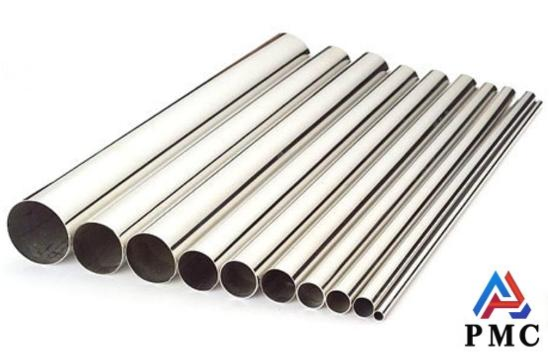
No weld seam — With no longitudinal weld, seamless pipe avoids the heat-affected zone and weld-seam corrosion risk that welded pipe carries, and holds a more consistent wall thickness around the circumference — a real factor in pressure-critical or hygienic service.
Corrosion resistance — With roughly 18% chromium and 8% nickel, 304 resists atmospheric exposure, water, steam, and many common chemicals, which is why it's widely used in chemical processing, oil and gas, and food-grade applications.
Strength — Per ASTM A312, 304 pipe carries a minimum tensile strength of 515 MPa and minimum yield strength of 205 MPa (Rockwell B80 / Brinell 187), giving it dependable mechanical performance across normal process conditions. For high-pressure or elevated-temperature service, the actual allowable pressure should be calculated per the applicable piping code rather than assumed from these baseline properties.
Processability — Good plasticity and weldability mean 304 seamless pipe machines, forms, and welds without the cracking issues that can affect less stable alloys, which is why it's widely used in industrial manufacturing and construction.
304 stainless steel seamless pipes are widely used across food and pharmaceutical, petrochemical, and infrastructure sectors:
Food and pharmaceutical: transporting liquids where hygiene and corrosion resistance both matter.
Petroleum and chemical industry: valued for its combination of corrosion resistance and mechanical reliability.
Infrastructure construction: underground pipelines and urban water supply systems.
Technically reviewed by PMC's quality engineering team against ASTM A312 / ASME SA312 and ASME B36.19M dimensional tolerances.
Read more:
304 Stainless Steel Seamless Pipe processing Fracture Analysis
