


Yes, galvanized steel pipe can be buried underground, and in most cases it is a sound choice. Galvanized steel pipe is produced by hot-dip galvanizing or electro-galvanizing, forming a zinc layer that gives it real, measurable corrosion resistance, along with good weldability and machinability — properties that make it a practical choice for buried pipeline installation as well as general outdoor and utility use. However, galvanizing on its own is not a guarantee against corrosion in every soil condition: how long that protection lasts underground depends mainly on soil conditions, burial depth, and the service life the project requires.
Galvanizing protects steel pipes in two ways: the zinc coating acts as a physical barrier against moisture and corrosive substances, and it corrodes preferentially to the underlying steel (sacrificial protection) if the coating is scratched or damaged. This gives galvanized steel pipe underground meaningfully better corrosion resistance than uncoated steel pipe. In corrosive soil, however, the coating is gradually consumed over time — how quickly depends on the specific conditions below.
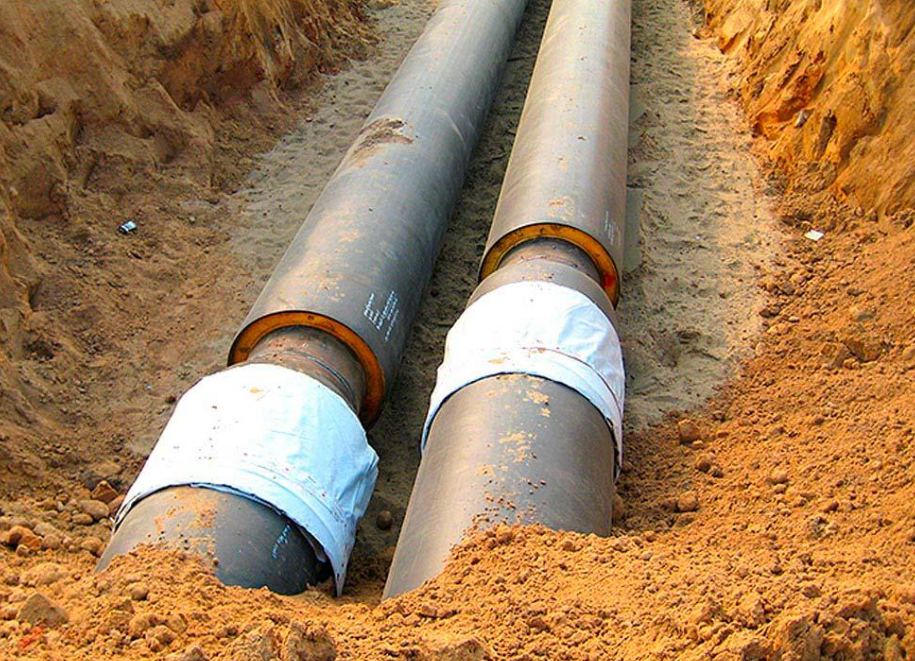
Additional protection is worth considering when a galvanized steel pipe buried underground will sit in:
Wet or poorly drained soil
Soil with high salt or chloride content
Strongly acidic or alkaline soil (pH extremes)
Conditions with stray electrical currents or highly variable soil resistivity
Deep burial, where the pipe is hard to inspect or replace
In these conditions, additional protection helps slow corrosion and extend the service life of the pipe.
When soil conditions call for more than the zinc coating alone, common options for a buried galvanized steel pipe include:
Petroleum asphalt or coal tar epoxy coating, often reinforced with fiberglass wrap — a standard, cost-effective choice for general buried service
3-layer polyethylene (3PE) or fusion-bonded epoxy (FBE) coating — higher-performance systems for more corrosive soil or longer design life
Anti-corrosion wrapping tape (polyethylene or PVC-based) — typically used at joints, fittings, and repair sections, or on smaller-diameter lines
Cathodic protection, added as a supplement to coating (not a replacement) in especially corrosive or high-risk soils
Before any coating is applied, the pipe surface must be clean, dry, and free of oil or rust so the coating bonds properly — poor surface preparation is the most common reason a coating fails early. The right combination should be chosen based on soil corrosivity, pipe diameter, and the service life the project requires. Overall, galvanized steel pipe can be buried underground, and the zinc coating provides a genuine degree of corrosion protection. In harsher soil or more demanding underground conditions, though, adding one of the anti-corrosion methods above is the safer choice for long-term performance.
Related articles:
Corrosion Protection and Long-Term Maintenance of Galvanized Steel Pipes
Will Galvanized Steel Pipes Rust?
Storage and Maintenance of Galvanized Steel Pipes
Advantages and Disadvantages of Galvanized Steel Pipe
Seamless Steel Tubes VS Galvanized Steel Pipes in Terms of Corrosion Prevention
