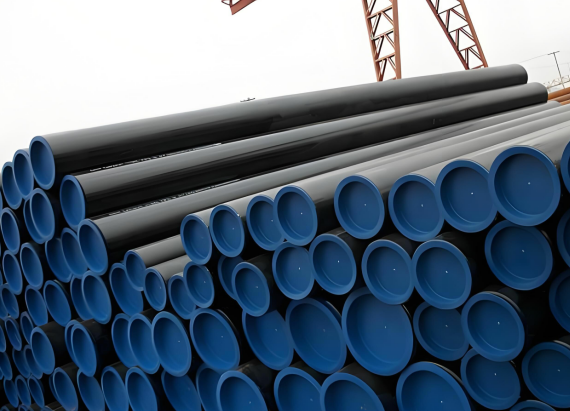
Seamless steel pipes are widely used in many fields, such as construction, machinery manufacturing, and petrochemicals. The connection methods and sealing techniques for seamless steel pipes are crucial to their performance and safety.
Seamless Steel Pipe Connection Methods:
1. Welding Connection
Welding is one of the most common connection methods for seamless steel pipes. It has advantages such as high connection strength and good sealing performance. Common welding methods include manual electric arc welding, argon arc welding, and submerged arc welding.
Manual electric arc welding is flexible and suitable for welding in various positions, but it requires a high level of skill from the welder. When performing manual electric arc welding, attention must be paid to the selection of welding current and voltage, as well as the control of welding speed and welding angle.
Argon arc welding is characterized by high weld quality and aesthetically pleasing welds, and is often used in applications requiring high weld quality. It uses argon gas as a protective gas to prevent the weld from being oxidized.
Submerged arc welding has high welding efficiency and is suitable for large-scale welding production. It involves burying the electric arc under a layer of flux, which effectively reduces defects such as porosity and slag inclusions in the weld.
2. Threaded Connection
Threaded connections are a detachable connection method, convenient for both installation and disassembly. They are typically used for connecting seamless steel pipes with smaller diameters. When making threaded connections, attention must be paid to the machining accuracy of the threads and the fit tolerances. Pipe threads are generally used, and there are cylindrical and tapered pipe threads. Cylindrical pipe threads are mainly used in low-pressure, non-sealing applications; tapered pipe threads have better sealing performance and are suitable for medium- and high-pressure pipeline connections. To ensure a good seal, sealing materials such as PTFE tape or sealant are also required at the threaded connection.
3. Flange Connection
Flanged connections are suitable for parts that require frequent disassembly and maintenance, as well as for pipelines with larger diameters and higher pressures. They are made by bolting two flanges tightly together, with a gasket sandwiched between them.
Pipe flange types include slip-on flanges, weld neck flanges, and loose flanges. Slip-on flanges have a simple structure and are easy to manufacture, but their sealing performance is relatively poor; weld neck flanges have good sealing performance and are suitable for high-pressure, high-temperature pipelines; loose flanges are suitable for applications where pipelines require frequent disassembly.
4. Compression Fitting
Compression fitting is a new type of connection method with advantages such as convenient installation and good sealing performance. It mainly consists of a ferrule, a nut, and a fitting body. During installation, the ferrule is fitted onto the steel pipe, and then the nut is tightened. The ferrule deforms under the force of the nut, tightly gripping the steel pipe, thus achieving connection and sealing. Compression fitting is suitable for connecting seamless steel pipes under medium and low pressure and is commonly used in instrumentation, automated control systems, and other fields.
Sealing Techniques for Seamless Steel Pipes:
1. Selection of Sealing Materials
The performance of the sealing material directly affects the sealing effect of the seamless steel pipe. Common sealing materials include rubber, asbestos, and polytetrafluoroethylene (PTFE). Rubber sealing materials have good elasticity and sealing performance, suitable for pipe sealing at various temperatures and pressures; asbestos sealing materials are resistant to high temperatures and high pressures, but their use is gradually being restricted due to certain health hazards; PTFE sealing materials have excellent chemical stability and corrosion resistance, suitable for pipe sealing in highly corrosive media.
2. Treatment of Sealing Surfaces
The quality of the sealing surface also greatly affects the sealing effect. Before connection, the sealing surfaces must be cleaned and polished to remove oil, rust, and other impurities, ensuring a smooth and even surface. For welded connections, the weld surface must be smooth and free of defects such as porosity and cracks; for flange connections, the flange sealing surface must meet the relevant standard requirements.
3. Gasket Installation
Gaskets are crucial components for achieving a seal. When installing gaskets, pay attention to the material, size, and installation position. The gasket material must be compatible with the medium and operating conditions in the pipeline; the gasket size must match the size of the sealing surface, neither too large nor too small; during installation, ensure the gasket is correctly centered, without any offset or twisting.
4. Pre-tightening Force Control
In flange and threaded connections, the magnitude of the pre-tightening force significantly affects the sealing effect. Insufficient pre-tightening force prevents the gasket from deforming sufficiently, leading to a poor seal; excessive pre-tightening force may damage the gasket or connecting components. Therefore, the preload should be reasonably controlled according to the specific connection method and sealing requirements. Generally, a torque wrench or similar tool can be used to control the bolt tightening torque.
In summary, selecting appropriate seamless steel pipe connection methods and mastering effective sealing techniques can ensure the safe and reliable operation of seamless steel pipes under various working conditions and improve the overall performance of the pipeline system.
Read more: Method for Cleaning the Inner Wall of Carbon Steel Tube