


Steel pipe packaging requirements cover protection against damage, bundling and packing methods, packaging and protective materials, and thread and pipe end protection. The sections below apply to seamless pipe(SMLS pipe) and welded steel pipes.
Packaging should prevent seamless and welded steel pipes from loosening, deformation and damage during normal handling, transportation and storage. If the buyer has special requirements for packaging materials and methods, they should be stated in the contract. If the contract does not specify them, the supplier selects the packaging materials and methods.
Packaging materials should comply with relevant standards. Materials not covered by the standard should be of a quality suitable for the intended use. Their design and use should consider reuse and recycling, and they may change with technological and economic developments. The main material groups are:
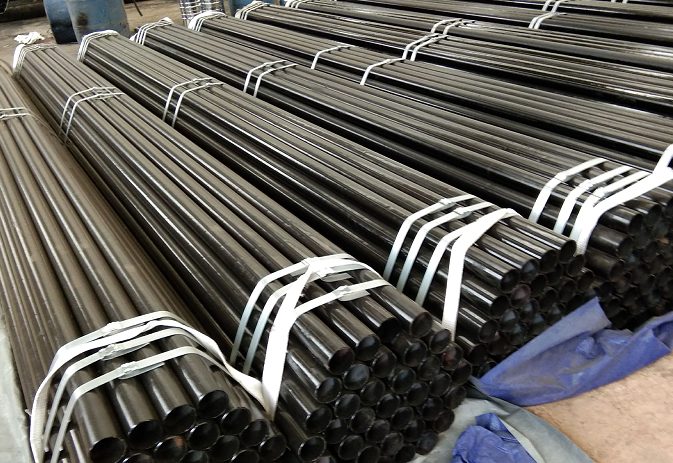
Bulk or bundled delivery. Steel pipes with an outer diameter greater than 159 mm, or special-shaped steel pipes with a cross-sectional circumference greater than 500 mm, can be delivered in bulk. Other steel pipes are recommended to be delivered in bundles, tightly bundled with binding materials.
Grouping. Each bundle should contain steel pipes of the same batch number, except where the product standard approves otherwise. Pipes delivered in fixed length or multiple lengths should be bundled separately from pipes delivered in non-fixed length or multiple lengths. Short-length pipes should be bundled individually.
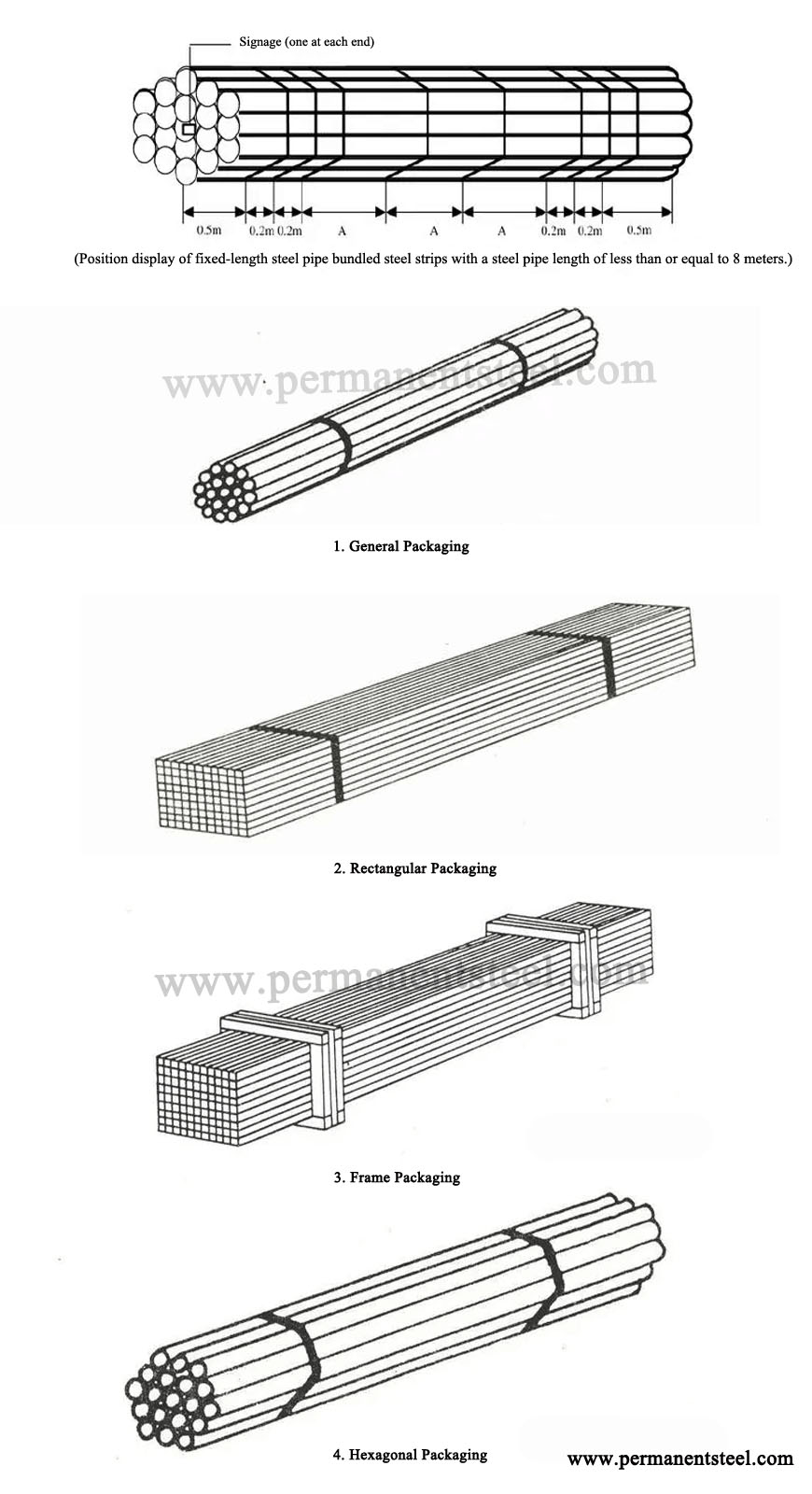
Bundle forms and bundling lanes. Bundled packaging can be general, rectangular, frame or hexagonal. The bundling lanes should be 300 mm to 500 mm from both ends of the pipe and evenly distributed. Other bundled forms can be used after negotiation between supplier and buyer.
Bundle weight. The weight of each bundle of polished steel pipes, precision steel pipes and cold-drawn (rolled) stainless steel pipes should not exceed 2500 kg. The weight of each bundle of other steel pipes should not exceed 5000 kg. By agreement between supplier and buyer and stated in the contract, other bundle weight regulations may be adopted.
Number of bundling lanes and length difference. The minimum number of bundling lanes depends on the length of the steel pipes in the bundle:
Length difference of steel pipes in each bundle
Minimum number of bundling lanes
Length difference of steel pipes in each bundle
≤3
2
>3–4.5
3
>4.5–7
4
≤1.0
>7–10
5
>10
6
≤1.5
One end of each bundle should be flush. The difference between the longest and shortest pipe at the other end should comply with the table. When bundling with steel wire, each lane should be twisted into at least 2 strands, and the number of strands per lane should increase with the outer diameter of the pipe and the weight of the bundle.
Polished and precision steel pipes. Before bundling, coat the inner and outer surfaces with anti-rust oil or another anti-rust agent. Then wrap the pipes in moisture-proof paper and sackcloth (or woven tape, plastic cloth), in that order.
Container packaging here means sturdy packing boxes such as iron boxes and wooden boxes. After negotiation between supplier and buyer and as stated in the contract, the following can be packed this way:
For packaging details specific to seamless pipes, see our guide to seamless steel pipe packaging requirements.
When loading pipes into containers:
Stainless steel pipes follow the bundling and container requirements above. The points below are specific to their surface and wall thickness:
For more detail, see our guide to packaging and transportation precautions for 304 stainless steel pipes.
Steel pipe end protection depends on the pipe end form, product requirements and contract terms.
Related article:
