Seamless pipes (SMLS pipe) are prone to internal stress and coarse grains after rolling and cold drawing, which can lead to deformation and cracking if used directly. Heat treatment, through precise control of heating, holding, and cooling, alters the internal microstructure of the steel pipe, achieving targeted optimization of properties such as hardness, toughness, and wear resistance. It is a core technology for meeting demanding working conditions such as high pressure, wear resistance, and precision.
Six Core Heat Treatment Processes:
1. Annealing
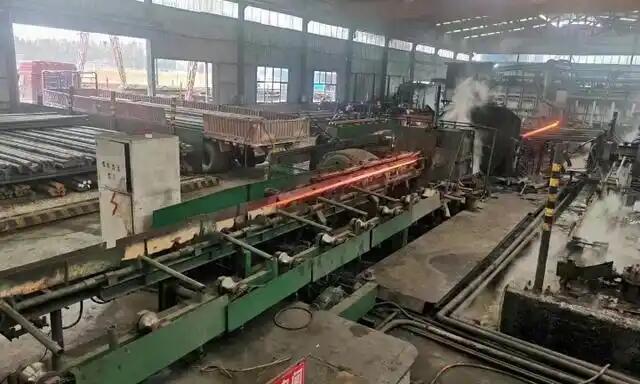
Process Core: Heating to 30-50℃ above the critical point (Ac3 for hypoeutectoid steel, Accm for hypereutectoid steel), followed by slow furnace cooling (≤50℃/h). This is further subdivided into three types: full annealing, spheroidizing annealing, and stress-relief annealing.
The
purpose of annealing:
Eliminates residual stress from welding/cold drawing, preventing deformation during subsequent processing;
Reduces hardness by more than 30%, making cold bending, flaring, and other processing smoother;
Homogeneizes the microstructure, laying the foundation for subsequent processes such as quenching.
Applicable Scenarios: Precision hydraulic pipes, instrument pipes, structural components requiring extensive machining.
2. Normalizing
Core Process: Similar heating temperature to annealing, but with air cooling (faster cooling rate), forming a fine pearlite structure.
Benefits of Normalizing:
Grains are 20%-30% finer than annealed grains; strength is increased by 10%-20%; moderate hardness (HB170-230); better machinability than annealed state; eliminates Widmanstätten defects caused by hot rolling.
Applicable Scenarios: General fluid transport pipes, pressure vessel shells, turbine structural components.
3. Quenching + Tempering
Application Example:
API 5L X70 Pipeline Steel:
After tempering treatment using "quenching (920-950℃ heating + water quenching) + high-temperature tempering (600-630℃)," the following properties are achieved:
① Tensile strength ≥ 570MPa, yield strength ≥ 485MPa;
② Impact absorption energy at -20℃ ≥ 40J, meeting the low-temperature crack resistance requirements of long-distance oil and gas pipelines;
③ The metallographic structure is uniform tempered sorbite, capable of withstanding alternating loads under complex field conditions.
4. Surface Quenching
Core Process: Only the surface layer of the steel pipe is heated to the quenching temperature, followed by rapid cooling, while the core structure remains unchanged.
Induction hardening: Electromagnetic heating, controllable hardened layer of 0.5-10mm, minimal deformation;
Flame hardening: Oxyacetylene heating, suitable for localized hardening of large-diameter pipes.
The purpose of surface hardening:
Surface hardness HRC55-60, core toughness maintained, fatigue strength increased by 2-3 times.
Applicable scenarios: Hydraulic cylinder barrels, drive shaft sleeves, wear-resistant pipes for mining machinery.
5. Chemical heat treatment
Through atomic diffusion infiltration to change the surface composition, achieving special properties: carburizing, nitriding, etc.
Unique advantages: Nitriding process results in minimal deformation, achieving precision down to 0.01mm, requiring no subsequent processing.
6. Special processes: To meet extreme requirements
Isothermal quenching: After quenching, isothermal treatment at 200-400℃ forms lower bainite, eliminating the risk of cracking, suitable for
high-pressure thick-walled pipes.
Aging treatment: Holding at room temperature/100-200℃ stabilizes the dimensions of precision pipes used in aerospace, preventing deformation during service.
Frequently Asked Questions:
Why must tempering be performed after quenching?
Quenched steel pipes have internal stresses exceeding 300 MPa, exhibiting extreme brittleness and prone to fracture upon slight impact. Tempering can eliminate over 90% of the stress.
How to choose between annealing and normalizing?
For cold working, choose annealing (lower hardness); for direct use, choose normalizing (higher strength). Normalizing costs only 60% of annealing.
Does stainless steel pipe require heat treatment?
304 stainless steel pipes commonly undergo solution treatment (water quenching at 1050-1100℃) to dissolve carbides and improve corrosion resistance, similar to the principle of annealing.
Read more: Types of Seamless Carbon Steel Pipes