


API thread specifications define the types, dimensions, and requirements of threaded connections used for oil and gas casing and tubing. Common API thread types include API Round Thread and Buttress Thread. This guide explains API thread types, dimensions, thread charts, and common fittings.
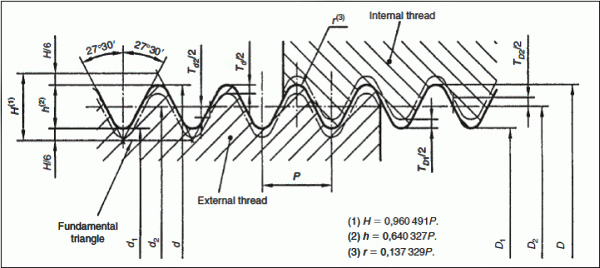
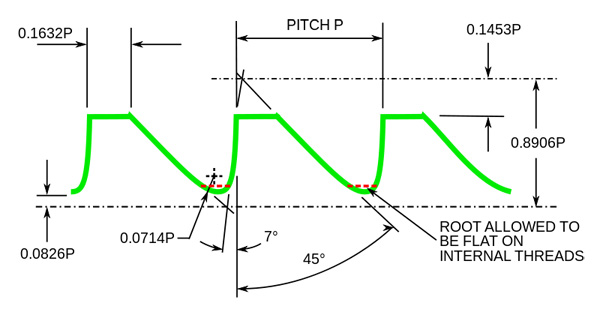
2) The design of the thread parameters are optimized to ensure that at least there is a tight fit around the thread, there is no gap, so that the sealing capacity of the terminal is greatly improved.
Structure: Improved thread that is not in accordance with API standards (such as Hydrill, Tenaris, etc.), often with metal sealing surface, no thread grease required.
Application: Ultra-high pressure, high corrosion or gas sealing requirements (such as shale gas wells, deep-sea pipelines).
API thread specification parameters define the mechanical and dimensional requirements that keep casing and tubing connections interchangeable and reliable in the field. These parameters generally fall into three categories:
2.1 Size Range
API threaded connections cover a wide range of pipe sizes, from around 1.050 inches for oil pipe up to 20 inches for large-diameter casing. The applicable API specification defines the thread form and dimensions for each size.
2.2 Tolerance System
Each API thread specification sets the allowable deviation in thread diameter, pitch, and tooth angle. These tolerances are what allow connections manufactured by different suppliers to be interchangeable and to make up reliably in the field, without relying on match-fitting individual joints.
2.3 Sealing Design
Sealing performance depends on the thread type. Round threads typically rely on thread grease (dope) to fill the clearance between mating threads and prevent leakage. Buttress and other trapezoidal-profile threads achieve an initial mechanical seal through closer tooth-to-tooth contact, which is then reinforced with thread compound to complete the seal.
|
API Thread Type |
Thread Profile |
Typical Application |
|
API Round Thread |
Round profile |
Casing |
|
API Buttress Thread |
Buttress profile |
Casing and tubing |
|
Premium Connection |
Enhanced sealing design |
Demanding well conditions |
API thread dimensions vary by pipe size, thread type, and applicable API specification. Always refer to the relevant API standard for exact dimensions and tolerances.
API threaded connections are matched to the pipe's service conditions. Round thread fittings are commonly used where good sealing performance and easy field maintenance are priorities, while buttress thread fittings are selected for casing and tubing strings that need to withstand higher tensile or compressive loads. Premium connections are reserved for wells with ultra-high pressure, corrosive fluids, or strict gas-tight sealing requirements. Some casing and tubing applications also use internal flush thread connections, which maintain a smooth internal bore for improved flow characteristics.
For related connection types used in drilling operations, see our guide to drill pipe connection types.
API stands for American Petroleum Institute. An API thread is a threaded connection manufactured to API specifications, used to join casing, tubing, and other pipe in oil and gas well construction.
The main types are the API Round Thread and the API Buttress Thread. Round thread is widely used for casing connections due to its good sealing performance and ease of maintenance, while buttress thread is used where higher tensile and compressive strength is required.
Round thread has a rounded profile and is easier to process and maintain in the field. Buttress thread has a flatter, near-axial load-bearing profile that provides greater tensile and compressive strength, making it better suited to higher-load casing and tubing connections.
