Rectangular tubes (RHS tube) are a common type of metal structural tubing with a rectangular cross-section. They are widely used in construction, machinery manufacturing, and automobile manufacturing. The manufacturing process and technology of rectangular tubes are crucial for ensuring their quality and performance.
Manufacturing Process of Rectangular Tubes:
The manufacturing processes and technologies of rectangular tubes encompass two main categories: seamless and welded. These involve various forming, welding, and post-processing methods to meet the performance requirements of different application scenarios. Seamless rectangular tubes are produced by piercing solid round steel and then processing it through hot rolling or cold drawing, resulting in a seamless process. Welded rectangular tubes are made by cold bending or hot bending steel plates or strips and then welding them together.
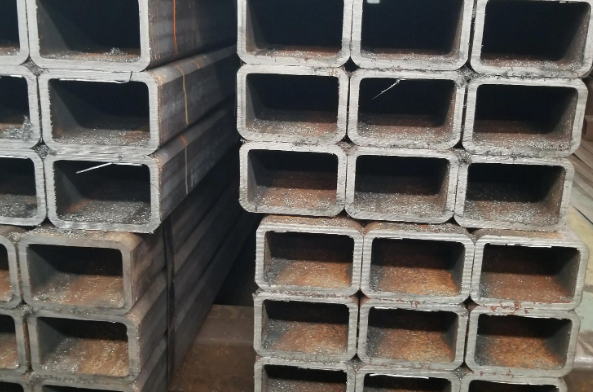
The manufacturing process of rectangular tubes mainly includes: raw material preparation, hot rolling or cold rolling, welding, straightening, cutting, and surface treatment.
Specific steps are as follows:
1. Raw material preparation is the first step in rectangular tube manufacturing. Commonly used raw materials include carbon steel, alloy steel, and stainless steel. These raw materials need to undergo cutting and heat treatment processes to meet the requirements of rectangular tubes.
2. Hot rolling or cold rolling is a key step in manufacturing rectangular tubes. Hot rolling involves heating raw materials to a specific temperature and then rolling them through a rolling mill, while cold rolling is performed at room temperature. Both rolling methods can create rectangular cross-sections from the raw materials.
For example, cold-rolled rectangular tubes are hollow cross-section profiles made from hot-rolled steel strips or plates through multi-pass rolling, bending, and high-frequency welding at room temperature. Compared to hot-rolled tubes, cold rolling eliminates the need for heating, reducing energy consumption by approximately 40%, and allows for the production of thinner-walled tubes.
3. Welding is the process of joining the two edges of a rectangular tube together. Common welding methods include resistance welding, arc welding, and laser welding, ensuring a smooth and high-strength weld. The choice of welding process significantly impacts the quality and performance of the rectangular tube.
4. Straightening ensures the straightness and evenness of the rectangular tube. Mechanical straightening or hydraulic straightening methods are used to straighten the rectangular tube to meet usage requirements.
5. Cutting is the process of cutting the rectangular tube to a specific length. Common cutting methods include shearing, sawing, and flame cutting.
6. Finally, rectangular tubes require surface treatment to improve their corrosion resistance and aesthetics. Common surface treatment methods include galvanizing, spraying, and polishing.
Main Production Technical Methods:
1. Rectangular tube forming technology is divided into hot rolling and cold rolling: Hot rolling is carried out at high temperatures, resulting in high production efficiency but lower dimensional accuracy; cold rolling is carried out at room temperature, achieving higher precision and surface quality.
2. For seamless tubes, cold drawing further improves dimensional accuracy and surface finish through die drawing; in welding technology, automated welding (such as laser welding) reduces human error, and weld inspection ensures reliability.
3. Surface treatment technologies include pickling, passivation, and galvanizing to enhance weather resistance and aesthetics.
4. Heat treatment processes (such as annealing and quenching) can improve the metal's microstructure and mechanical properties, such as adjusting material hardness and toughness.
Process Selection and Performance Impact:
Process selection depends on the material, specifications, and application. For example, seamless pipes are suitable for high-pressure, high-temperature environments (such as petrochemicals) because they have no weld defects; welded pipes are more economical and suitable for building structures. Hot rolling is low-cost but has limited precision, while cold rolling and cold drawing are suitable for applications requiring high precision. Surface treatment technology directly affects corrosion resistance; for example, hot-dip galvanizing can extend service life.
Quality Control and Development Trends:
Quality control is integrated throughout the entire production process, including raw material composition testing, dimensional tolerance control, non-destructive testing of welds, and final product performance testing.
Conclusion:
The manufacturing process and technology of rectangular tubes are key to ensuring their quality and performance. By rationally selecting raw materials, adopting appropriate rolling and welding processes, and performing straightening, cutting, and surface treatment, high-quality rectangular tubes that meet various application requirements can be manufactured.
Read more: Rectangular Tube Sizes