


A 304 stainless steel welded pipe offers good corrosion resistance in the atmosphere, in water and in many mild chemical environments, but it is not suitable for every corrosive condition. Its actual performance depends on chloride concentration, temperature, surface condition and weld quality. For applications involving high chloride levels, elevated temperatures or crevices, the grade and fabrication quality should be reviewed before selection. This article explains 304 stainless steel welded pipe corrosion resistance, when corrosion may occur, and how to reduce the risk in service.
304 stainless steel is an austenitic stainless steel whose chromium content allows a thin, dense passive film to form on the surface. This film limits contact between the steel and oxygen or other corrosive media. This article focuses on corrosion behavior; for general product information, see our overview of 304 stainless steel welded pipe.
304 stainless steel corrosion resistance is generally good in the atmosphere, water and many neutral solutions, mainly because of the passive film on its surface. In typical urban atmospheres, a clean 304 stainless steel welded pipe can keep a bright surface for a long time. However, it is not immune to staining or localized corrosion, particularly where chlorides, deposits or crevices are present.
Intergranular corrosion can occur when austenitic stainless steel is exposed to the sensitizing temperature range, for example during welding or in certain service conditions. Chromium carbides may then precipitate along the grain boundaries and locally reduce the chromium available nearby, making the material more susceptible to attack in some corrosive media.
Standard 304 is not a stabilized grade; stabilized grades such as 321 or 347 are designed with this concern in mind. 304L, with its lower carbon content, is often considered for welded fabrications to reduce the risk of sensitization, but it does not eliminate every intergranular corrosion risk. The suitable grade should be selected according to the actual medium, temperature and applicable material specification.
High-temperature oxidation resistance is a different property from corrosion resistance in liquids or chemical media. 304 stainless steel can form a protective oxide scale in some high-temperature oxidizing conditions, so it is used in equipment such as boilers and heat exchangers.
However, the acceptable service temperature depends on the medium, load, thermal cycling and the applicable material standard. Prolonged exposure to elevated temperatures can also affect corrosion behavior, so high-temperature service should be confirmed before material selection.
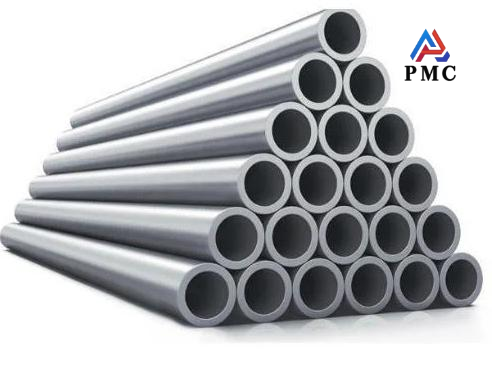
The corrosion performance of a 304 stainless steel welded pipe depends on service conditions and fabrication quality, not on the grade alone.
Chloride Concentration: Chloride ions can locally break down the passive film, so 304 stainless steel pitting corrosion and crevice corrosion are common concerns in chloride-containing media. When chloride levels are high or uncertain, state the medium clearly when specifying the pipe.
Temperature: Higher temperatures generally make localized corrosion more likely, particularly in chloride-containing media. Consider both the normal operating temperature and the temperature during cleaning or sterilization.
Weld Condition: Welding can affect 304 welded pipe corrosion behavior. Heat tint, oxide scale, incomplete cleaning or sensitization can create weak areas near the weld. Check welding procedures, post-weld cleaning and passivation requirements, and if the pipe will be welded further, confirm whether standard 304 or 304L is required.
Surface Contamination: Iron particles, grinding dust, oil and deposits can interrupt the passive film and cause rust spots. Avoid contact with carbon steel during storage and handling, and inspect the surface before installation.
304 stainless steel welded pipes are used in food processing, building decoration, some petrochemical lines and some medical equipment. Suitability depends on the specific medium, temperature and cleaning conditions.
304 stainless steel welded pipes may be used for some process and utility lines handling mild media. For strong acids, chloride-containing solutions or other aggressive media, suitability must be checked against the actual concentration and temperature.
Food processing lines may involve acidic or alkaline cleaning agents and hot steam. 304 stainless steel welded pipe is widely used here because its smooth surface is easy to clean and maintain, but chloride-containing cleaners or sanitizers should be assessed for corrosion risk.
Corrosion risk is usually reduced through proper fabrication, surface care, material selection and operating control, rather than by one universal treatment.
Welding can leave heat tint, oxide scale, spatter and other contaminants near the weld that damage the passive film. These should be removed by mechanical cleaning, pickling or other methods required by the process, followed by passivation where specified. For more details, see our guide on 304 stainless steel pipes after welding. Passivation helps restore a clean surface, but it does not make 304 suitable for every corrosive environment.
When chloride concentration is high or conditions are severe, evaluate 316/316L or another more suitable material instead of relying on surface treatment of 304. The molybdenum in 316 generally improves resistance to pitting and crevice corrosion. For a detailed comparison, see 316L stainless steel vs. 304 stainless steel in corrosion resistance.
Consider temperature, chloride content, crevices, standing liquid and cleaning conditions during design and operation. Avoid designs that trap liquid or create crevices where possible, drain and rinse the system after cleaning, and avoid prolonged contact with chloride-containing cleaners or solutions.
When comparing 304 vs 316 corrosion resistance, 316 stainless steel welded pipe is generally better against chloride pitting and crevice corrosion because it contains molybdenum. However, the right grade depends on the medium, temperature, welding and cleaning conditions, and 304 may still be suitable for milder environments.
Read more:
304 Stainless Steel Welded pipe VS Stainless Steel Seamless Pipe
