


1. What is CEW Tube?
CEW tube stands for Cold Drawn Electric Welded tube. It is a cold drawn welded tube produced from standard ERW tube, designed to achieve tighter dimensional tolerances, improved surface finish, and enhanced mechanical properties. The term CEW refers to the electric resistance welding process used to form the base tube before cold drawing. CEW tubes are commonly manufactured according to EN 10305-2, the European standard for cold-drawn welded precision steel tubes, and are available in diameters from 6.35 mm to 127 mm, including non-standard sizes upon request.
CEW tubes are widely used for hydraulic cylinder applications, especially multi-stage hydraulic cylinders, where dimensional accuracy and surface finish are critical. The manufacturing process is similar to that used for cold drawn seamless tubes, but the base tube is produced through electric resistance welding.
After ERW welding, the weld area is typically heat-treated or normalized to improve structural uniformity between the weld seam and the base material. Cold drawing, followed by appropriate heat treatment, helps achieve the final dimensional accuracy, surface quality, and mechanical performance required for precision applications.
The CEW tube manufacturing process involves several precision steps to improve dimensional accuracy, surface finish, and mechanical performance. This process is also commonly referred to as the CEW pipe manufacturing process in some industrial applications.
ERW Tube Formation — A steel strip is formed into a tubular shape and welded using high-frequency electric resistance welding without filler metal.
Weld Seam Treatment — The weld area may undergo heat treatment or normalization to improve structural uniformity and reduce residual stress.
Pickling and Cleaning — The tube is acid-cleaned to remove oxide scale and surface impurities, preparing it for cold drawing.
Cold Drawing — The tube passes through dies at room temperature to reduce diameter or wall thickness, improve dimensional tolerances, and achieve a smoother surface finish. Multiple drawing passes may be required.
Heat Treatment — Annealing, stress relieving, or normalization may be performed after drawing to restore ductility, reduce residual stress, and achieve the required mechanical properties.
Straightening and Cutting — Tubes are straightened and cut to the required lengths.
Inspection and Testing — Final inspections verify dimensional accuracy, surface quality, mechanical properties, and compliance with EN 10305-2.
For critical applications, buyers should request mill test certificates (MTCs) to verify chemical composition, mechanical properties, and relevant heat treatment conditions.
Each manufacturing step, especially cold drawing and heat treatment, directly affects the final mechanical properties and delivery condition of CEW tubes.
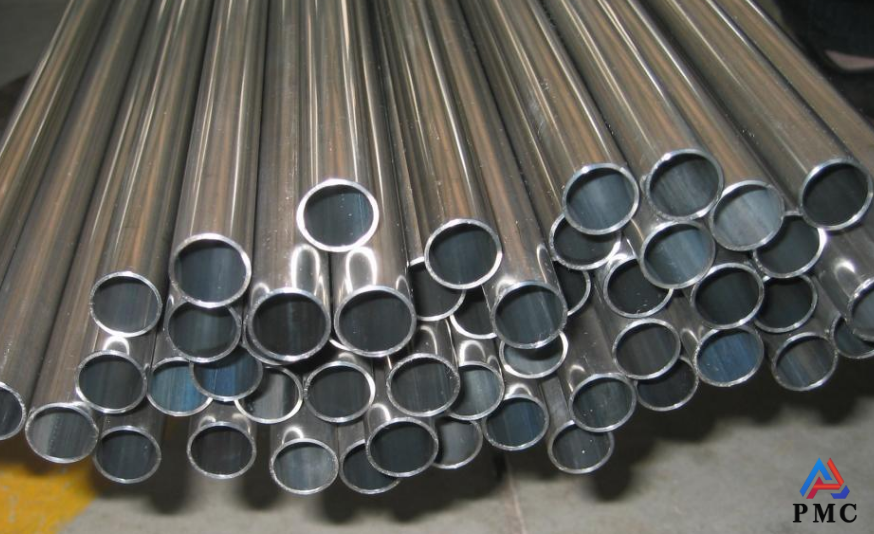
CEW tubes are available in carbon steel, alloy steel, and stainless steel materials. The material selection depends on required strength, dimensional performance, corrosion resistance, and the final application requirements.
|
Material Grade |
Typical Applications |
|
E355 |
Hydraulic cylinder tubes and precision applications |
|
E235 |
General precision mechanical tubing |
|
4130 / 4140 |
High-strength components |
|
Stainless steel 304 / 316 |
High-strength components |
Depending on customer specifications and application requirements, CEW tubes may also be supplied according to other standards, such as ASTM A513 for mechanical tubing.
When selecting CEW tube materials, buyers should confirm the exact grade and delivery condition with the supplier, as mechanical properties can vary between different grades and material specifications.
The selected material directly affects the tube's strength, corrosion resistance, and suitability for different applications.
CEW tube is supplied in three conditions, each suited to a different stage of use:
|
Condition |
Yield (N/mm²) |
Tensile (N/mm²) |
Elongation (%) |
Best For |
|
BK – as drawn |
320 |
400 | 6 |
High-strength use, no further forming |
|
GBK – annealed |
150 | 270 | 27 |
Machining, bending, secondary forming |
|
NBK – normalised |
155 | 280 | 25 |
Hydraulic cylinders, balanced strength & ductility |
Best Practice: Match the condition to what happens to the tube after it arrives — not just its rated strength on paper. Bending or expanding a BK (as-drawn) tube beyond its rated elongation risks cracking at the weld seam.
Material, condition, and application together cover most industrial needs — but for certain projects, the question becomes whether CEW tube is the right base construction at all.
CEW tubes are widely used in applications requiring high dimensional accuracy, smooth surface finish, and consistent mechanical performance, including:
Pneumatic cylinders — applications requiring precise bore dimensions and smooth internal surfaces, typically under lower pressure conditions than hydraulic systems.
Precision machinery — components requiring tight dimensional tolerances and repeatable mechanical properties.
Automotive components — shafts, steering components, and structural parts requiring consistent wall thickness and dimensional accuracy.
Construction equipment — structural and load-bearing tubular components.
Agricultural machinery — mechanical parts exposed to variable loads and outdoor conditions.
Oil & gas and petrochemical equipment — selected structural and mechanical components requiring precision tubing.
Industrial machinery — machine components requiring dimensional accuracy and consistent performance.
Hydraulic cylinder barrels — especially multi-stage hydraulic cylinders, where precise inner diameter tolerances, smooth surface finish, and reliable performance are required.
Because cold drawing improves dimensional accuracy and surface quality, CEW tubes can reduce secondary machining requirements and provide cost advantages compared with machined components or seamless alternatives in many applications.
For hydraulic cylinder applications, buyers should specify requirements such as pressure rating, stroke length, bore tolerance, and wall thickness to ensure the selected CEW tube meets the final operating conditions.
In addition to application requirements, the delivery condition (BK, GBK, or NBK) also affects the tube's final mechanical performance and suitability for different applications.
CEW tube — full form Cold Drawn Electric Welded tube — is a welded ERW tube that has been cold drawn to achieve high precision dimensional tolerances, a superior surface finish, and improved tensile properties. It's manufactured to the EN 10305-2 standard and available in diameters from 6.35mm to 127mm.
The process starts with forming and welding a steel strip into an ERW tube, followed by weld seam treatment, pickling, cold drawing through dies, optional heat treatment, straightening and cutting, and final inspection against EN 10305-2.
CEW tubes are produced in carbon steel (including E235/E355 precision grades), alloy steel (4130/4140), and stainless steel (304/316), selected based on strength, corrosion resistance, and application requirements.
ERW tube is the welded base product; CEW tube is that same tube after cold drawing, which gives it higher dimensional accuracy and a better surface finish. ERW tube suits general-purpose tubing, while CEW tube is used where precision matters.
Yes — CEW tube is one of the most common choices for multi-stage hydraulic cylinder barrels, thanks to its tight tolerances, smooth bore finish, and cost advantage over seamless tube for most pressure ranges.
CEW tube — a Cold Drawn Electric Welded tube made to EN 10305-2 by cold drawing a standard ERW base tube — offers tighter tolerances, a smoother finish, and more consistent mechanical properties than as-welded ERW tube, at a lower cost than seamless tube. Available in carbon, alloy, and stainless steel grades and in BK, GBK, or NBK conditions, it is widely used for multi-stage hydraulic cylinders, pneumatic cylinders, and precision automotive and industrial components. Buyers should confirm grade, condition, and tolerances with the supplier, and request MTCs for critical applications.
Related aticles: DOM Tube vs CEW Tube: Key Differences
