


Yes, galvanized steel pipes can be painted to improve their appearance or add another protective layer. However, the zinc-coated surface requires proper preparation to ensure good paint adhesion. Cleaning the surface and choosing a compatible primer and topcoat are key steps in achieving a durable finish.
Galvanized steel pipe is coated with zinc, usually by hot-dip galvanizing or electroplating. The zinc surface is smooth and can have low paint adhesion, and zinc can react with acids and alkalis. For this reason, ordinary paint applied directly to bare zinc may peel or fail early.
The surface condition also varies. New pipe may carry oil or a passivation film, while pipe exposed to humid or salt-spray environments may show white rust (a white zinc corrosion product). If the zinc has worn through, the steel underneath can rust. Each condition affects how the pipe should be prepared before painting.
Extra protection: A paint system adds a barrier over the zinc layer, which is useful outdoors or in harsh environments.
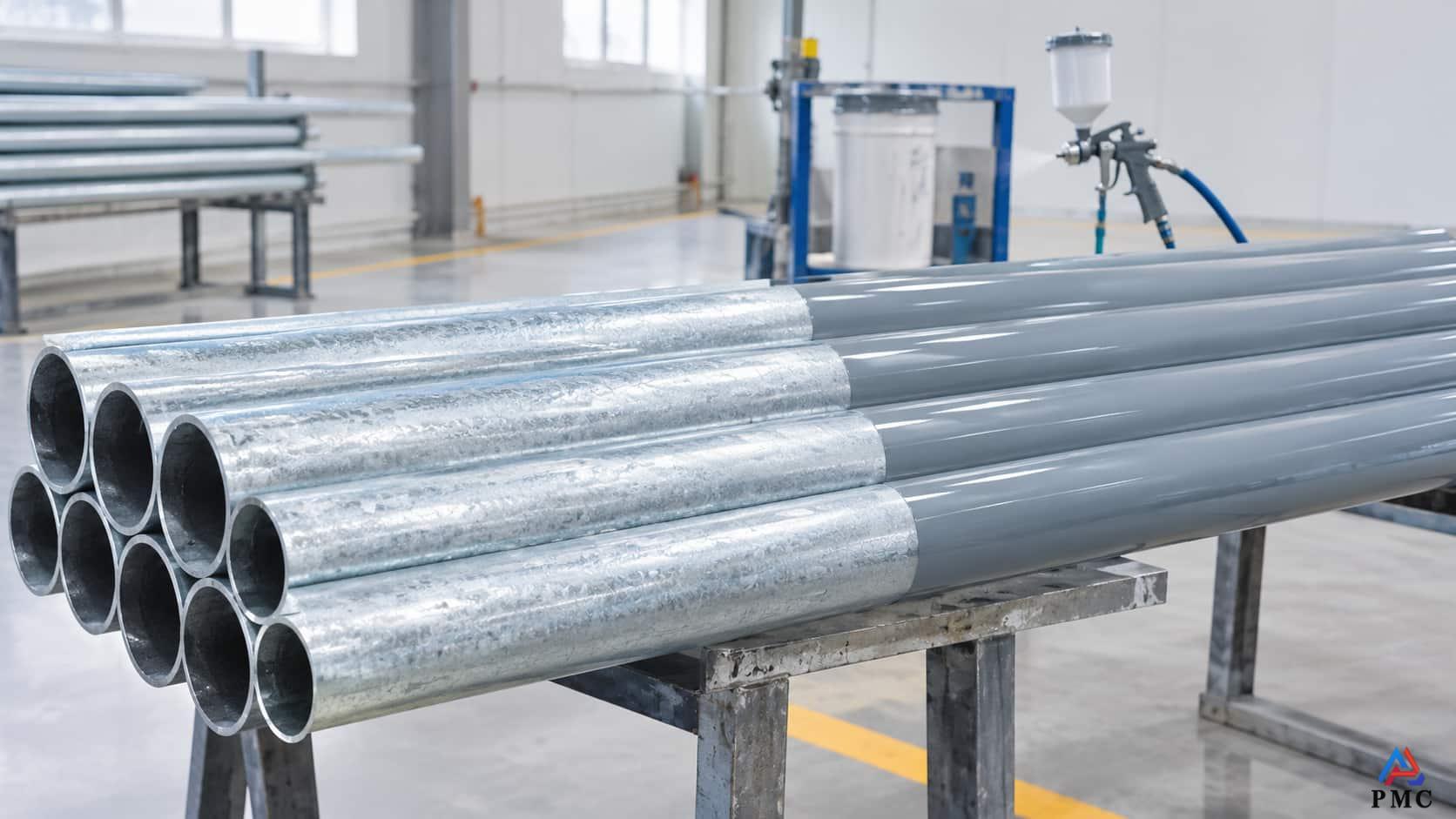
Successful GI pipe painting depends on following these steps in order:
Clean the surface. Use soapy water or a degreaser or solvent cleaner recommended by the coating manufacturer to remove grease, dust, and loose white rust.
Prepare the surface. The right preparation depends on the condition of the zinc layer and the paint manufacturer’s instructions. Smooth or passivated zinc may need light abrasion or a specified pretreatment to help adhesion, while weathered zinc may only need loose white rust removed. Do not sand or grind away the zinc layer, since it provides the pipe’s corrosion protection. If the zinc has corroded through and rust has formed on the steel, remove the rust with a wire brush and treat that area as the primer manufacturer directs.
Apply primer. Apply a primer suitable for galvanized surfaces to the clean, dry pipe, following its data sheet. Do not apply the topcoat directly to bare zinc.
Apply the topcoat. Use a topcoat compatible with the primer, applied by brush, roller, or spray gun in even coats. Follow the manufacturer’s guidance on the number of coats and the drying time between them.
Allow the paint to cure. Keep the pipe ventilated and dry, and avoid moisture and handling until the paint has cured. Curing time depends on the product and conditions, so check the data sheet.
A primer for GI pipe should be formulated or approved for galvanized surfaces, and it must be compatible with the topcoat that follows. Using primer and topcoat from the same coating system is the safest way to avoid adhesion problems. Epoxy primers and zinc phosphate primers are among the types offered for galvanized steel. No single primer suits every galvanized pipe, because the right choice depends on the zinc surface condition, the service environment, and the topcoat. Before buying, check the technical data sheet to confirm that the product can be used on galvanized steel.
Choose GI pipe paint that is compatible with your primer and suited to where the pipe will be used. Confirm on the data sheet that the whole system is rated for galvanized surfaces.
Epoxy paint: It offers good adhesion and corrosion resistance. Epoxy paint for steel pipe can be used as a primer or protective coat on galvanized pipe when the product is rated for galvanized surfaces. Standard epoxy coatings may chalk and fade in sunlight, so exposed outdoor pipes are often finished with a weather-resistant topcoat.
Polyurethane paint: It has good weather resistance and high gloss, so it suits outdoor use. Apply it over a compatible primer, such as an epoxy primer.
Water-based acrylic paint: It is environmentally friendly, low in odor, and moderately durable, which suits interior use. Use a primer or system approved for galvanized surfaces
Read more:
