In modern chemical and petroleum industries, seamless pipes (SMLS) serve as a crucial basic material, undertaking the important task of transporting high-temperature, high-pressure, and corrosive media. Their performance directly affects the safe operation and production efficiency of the plants. This article will comprehensively analyze the technical key points of seamless steel pipes used in petrochemical and chemical plants from the aspects of material characteristics, application scenarios, standards and specifications, and future development trends.
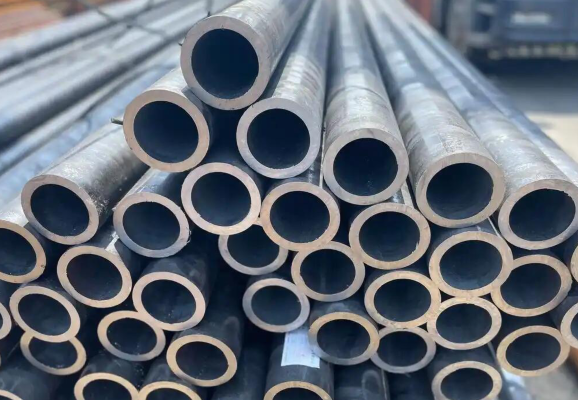
Material Characteristics and Core Advantages:
Due to their seamless, integrated structure, seamless pipes are significantly superior to
welded steel pipes in terms of pressure resistance and sealing performance. Taking seamless steel pipes used in petroleum cracking as an example, which need to withstand temperatures above 450℃ and hydrogen sulfide corrosion, Cr-Mo alloy steel (such as 15CrMoG) or austenitic stainless steel (such as 0Cr18Ni9) are typically used. These steel pipes must pass the GB 5310 standard certification, "Seamless Steel Pipes for High-Pressure Boilers," with a tensile strength of at least 415MPa and a yield strength of not less than 205MPa. In hydrocracking units, steel pipes must also possess resistance to hydrogen embrittlement, typically achieved by adding trace elements such as vanadium and niobium to improve grain boundary stability.
Typical Application Scenarios and Technical Parameters:
1. Oil Refining Units: The transfer line in atmospheric and vacuum distillation units uses large-diameter seamless pipes (Φ219mm~Φ813mm) with operating pressures up to 4MPa; the regenerator cyclone separator in catalytic cracking units requires 310S heat-resistant stainless steel pipes to withstand the scouring of flue gas at 900℃.
2. Ethylene Cracking: Data shows that the furnace tubes in the convection section of cracking furnaces mostly use HP40Nb centrifugal cast tubes, with a chromium-nickel content of 25Cr-35Ni, and a creep rupture strength remaining above 30MPa at 1000℃.
3. Coal Chemical Gasification Furnaces: The slag conveying pipes in Shell coal gasification units need to possess both wear resistance and corrosion resistance, often using bimetallic composite pipes with an inner layer of high-chromium cast iron (HRC≥58) and an outer layer of carbon steel pressure-bearing material.
It is worth noting that different media have different requirements for materials. When handling media containing chloride ions, super austenitic stainless steel (such as 254SMO) with a PREN (pitting resistance equivalent) value greater than 40 is required; while liquefied natural gas (LNG) cryogenic pipelines require 9% nickel steel to maintain good toughness at -196℃.
Comparison of Domestic and International Standard Systems:
my country's petrochemical pipes mainly follow standards such as GB/T 8163 (fluid transportation) and GB 9948 (petroleum cracking), which are benchmarked against
ASTM A335 (American standard) and EN 10216 (European standard). Taking P91 steel pipe as an example, GB 5310 and ASME SA335 have significantly different requirements for impact energy: the Chinese standard requires a transverse impact energy ≥40J (20℃), while the American standard requires a longitudinal impact energy ≥54J. The Zhihu column specifically emphasizes that in overseas EPC general contracting projects, attention must be paid to the additional requirements of the NACE MR0175 standard for hydrogen sulfide environments, including hardness control (HRC≤22) and sulfur content (≤0.01%).
Key Quality Control Nodes:
1. Manufacturing Process: Hot-rolled pipes require a final rolling temperature of 50°C above Ar3 to avoid banded structures; cold-drawn pipes require intermediate annealing to eliminate work hardening.
2. Inspection Technology: In addition to conventional ultrasonic testing, large-diameter thick-walled pipes require TOFD (Time-of-Flight Diffraction) to detect delamination defects; high-temperature service steel pipes should undergo intergranular corrosion testing (e.g., GB/T 4334 E method).
3. On-site Installation: The hydraulic test pressure should be 1.5 times the design pressure, and the pressure holding time should be no less than 10 minutes. A petrochemical project case shows that excessive chloride ion content (>25ppm) in the test water led to stress corrosion cracking in austenitic steel pipes.
Technological Innovation and Development Trends:
1. Material Upgrades: Sinopec Engineering Research Institute is promoting TP347HFG fine-grained stainless steel, which has a 20% higher creep strength than conventional TP347 and is suitable for ultra-supercritical conditions at 700℃.
2. Composite Technology: Titanium/steel composite pipes prepared by explosive bonding and hot rolling reduce costs by 60% compared to pure titanium pipes and have been successfully applied in acetic acid plants.
3. Intelligent Monitoring: An online corrosion monitoring system based on fiber optic sensors can achieve early warning of wall thickness changes with an accuracy of 0.1mm. After application at a refinery, the maintenance cycle was extended from 3 years to 5 years.
Read more: Carbon Steel Pipe vs. Stainless Steel Pipe