How to Distinguish the Quality of CS Seamless Pipes?
The quality of CS seamless pipes can be determined from the following aspects:
1. Visual Inspection
Observe the surface of the seamless steel pipe. It should be smooth, free of cracks, folds, scars, delamination, and other defects. Obvious scratches, pits, or rust on the surface may affect the service life and performance of the steel pipe.
Inspect the ends of the seamless steel pipe. The ends should be flat, free of burrs and flash. Uneven ends may cause damage during processing or use.
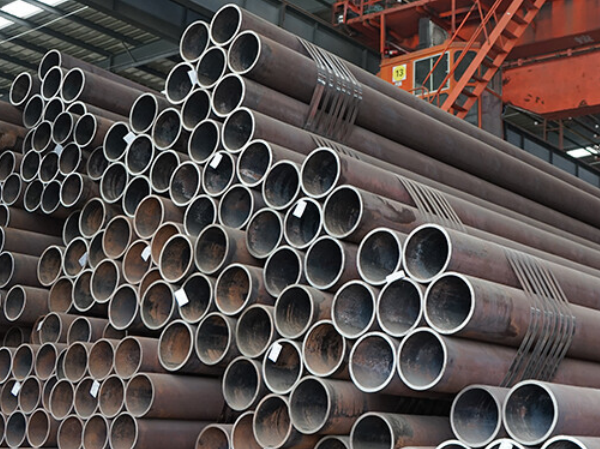
Check the color of the seamless steel pipe. Generally, the color of carbon steel seamless steel pipes is black (oxide scale) or grayish-white. Abnormal colors may indicate special treatment or quality problems.
2. Dimensional Accuracy
Measure the outer diameter, wall thickness, and length of the CS seamless steel pipe. These dimensions should conform to national standards or relevant specifications. Excessive deviations may affect the installation and use of the steel pipe.
Use calipers, micrometers, and other tools to measure and ensure dimensional accuracy. Simultaneously, check the roundness of the steel pipe; the smaller the roundness deviation, the better the quality. For steel pipes with special requirements, such as high-precision steel pipes, even more stringent dimensional measurements and inspections are necessary.
3. Material Quality
The main material of CS seamless steel pipes is
carbon steel, which should possess good mechanical and chemical properties. Material quality can be determined by checking the steel pipe's material certificate or conducting chemical composition analysis.
Check the hardness of the steel pipe. The hardness should meet requirements; excessively high or low hardness may affect the pipe's performance. Generally, hardness can be measured using a hardness tester.
Observe the metallographic structure of the steel pipe. The metallographic structure should be uniform and dense, without obvious segregation, inclusions, or other defects. The quality of the metallographic structure directly affects the mechanical properties and corrosion resistance of the steel pipe.
4. Pressure Resistance
Conducting a pressure test is one of the important methods for inspecting the quality of carbon steel seamless steel pipes. The two ends of the steel pipe can be sealed, and then a liquid or gas of a certain pressure can be injected. The deformation and leakage of the steel pipe under pressure can be observed.
The pressure of the pressure test should meet relevant standards or design requirements, and the test time should be long enough to ensure that the steel pipe can withstand the design pressure without leakage or rupture.
If the pressure test fails, it indicates a quality problem with the steel pipe, and it cannot be used.
5. Non-destructive Testing
Non-destructive testing methods can be used to detect internal defects in the steel pipe, such as cracks, inclusions, and porosity. Commonly used non-destructive testing methods include ultrasonic testing, magnetic particle testing, and penetrant testing.
Ultrasonic testing can detect internal defects in steel pipes, offering advantages such as fast detection speed and high sensitivity; magnetic particle testing is suitable for detecting surface and near-surface defects and is effective for ferromagnetic materials; penetrant testing is suitable for detecting surface opening defects and has high detection sensitivity.
Non-destructive testing can promptly detect internal defects in steel pipes, preventing accidents during use.
In summary, judging the quality of CS seamless pipes requires comprehensive consideration of multiple aspects, including appearance, dimensions, materials, pressure resistance, and non-destructive testing. When purchasing seamless carbon steel pipes, choose reputable manufacturers and suppliers, and request quality certificates and relevant test reports to ensure the pipes meet quality requirements. Furthermore, regular inspection and maintenance of the pipes during use are essential to promptly identify and address any issues, ensuring their safe operation.
Read more: Seamless Steel Pipe Manufacturing Process