


Seamless steel pipe (SMLS) means that there are no seams. It is a uniform hollow steel pipe made of round steel billets that are heated and perforated. During this process, the billet is stretched and rotated, ultimately forming a seamless circular pipe.
Welded steel pipes are made of steel plates or strips that are crimped and then welded. A weld will be formed at the weld. Compared with welded steel pipes, seamless steel pipes have a uniform and compact internal structure, higher strength, toughness and pressure resistance, and are widely used in various fields.
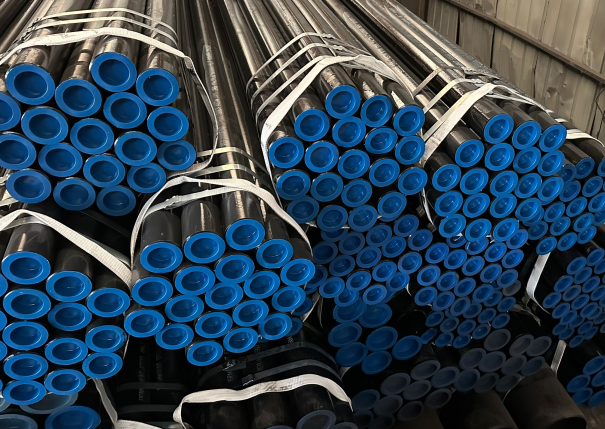
Internal defects of seamless steel pipes, such as inclusions, bubbles, cracks, etc., are usually detected through ultrasonic testing or radiographic flaw detection.
3. Magnetic detection
The seamless steel pipe material is relatively pure and has good magnetic permeability. Under the action of a magnetic field, it will produce obvious magnetization phenomenon. It can be detected by a magnetic flaw detector or a hand-held magnet.
Seamless steel pipes and welded steel pipes differ significantly in production, structure, performance, and application. Seamless pipes are formed by heating and perforating round steel billets, featuring no seams, uniform structure, and superior strength and pressure resistance, making them suitable for high-pressure, high-temperature industrial scenarios. Welded pipes are made by crimping and welding steel plates/strips, with visible welds and relatively lower strength, applicable to low-pressure, low-temperature civil and general industrial fields. This article details how to distinguish the two through appearance features (such as seamless pipes’ smooth surface vs. welded pipes’ weld traces) and detection methods. (hand feeling, ultrasonic testing, etc.)
Q1: What is the core difference between seamless and welded steel pipes?
A1: Seamless pipes have no welds, formed by heating and perforating steel billets; welded pipes have welds, made by crimping and welding steel plates/strips.
Q2: How to distinguish them through appearance?
A2: Seamless pipes have a smooth surface, uniform cross-section, and no weld traces; welded pipes have visible welds/melt marks and a relatively rough surface.
Q3: What detection methods can identify seamless and welded pipes?
A3: Common methods include hand feeling (seamless is smoother), ultrasonic/radiographic flaw detection, magnetic detection, pull-out test, and hydrostatic stress test.
Q4: Where are seamless and welded pipes mainly used?
A4: Seamless pipes are for high-pressure/high-temperature industrial fields (oil, chemical, etc.); welded pipes are for low-pressure civil/industrial fields (water supply, construction, etc.).
Permanent Steel Manufacturing Co.,Ltd (PMC) is a professional and experienced supplier of seamless steel pipes with rich industry experience, strict quality control and complete international certifications. We provide high-quality products and professional services for global customers. For any inquiries or cooperation, please feel free to contact us.
