


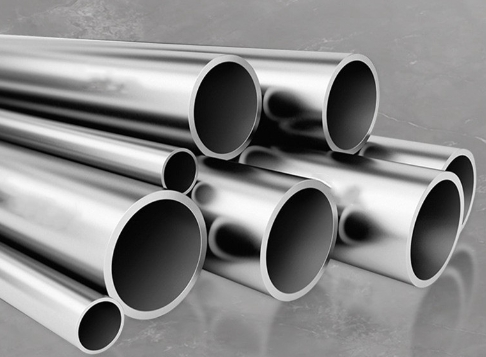
304 thin-walled stainless steel pipes have become a standard choice across food processing, chemical equipment, and water supply systems, largely due to their corrosion resistance and structural durability. Their lightweight construction also reduces material costs and simplifies handling during transport and installation. However, no material is without trade-offs. This article provides a balanced look at both the advantages and limitations/disadvantages of 304 thin-walled stainless steel pipes — from their resistance to bacteria and long service life, to concerns like higher upfront cost, thermal expansion, and installation complexity — to help buyers judge their application suitability for specific projects.
1. Corrosion Resistance
304 stainless steel contains chromium, which reacts with oxygen to form a thin passive film on the pipe's surface. This film acts as a barrier against oxidation, which is why 304 thin-walled stainless steel pipes hold up well in humid conditions and many common chemical environments, rather than corroding the way untreated carbon steel would.
2. Mechanical Properties
The combination of strength and toughness in 304 stainless steel allows the pipe to absorb a reasonable degree of pressure and impact without failing. This gives it an advantage over more brittle or lower-strength materials in many common water supply and industrial piping applications — though, as with any thin-walled product, its pressure-handling capacity should still be checked against the specific demands of higher-load systems.
3. Lightweight Construction and Material Savings
Because the thin-wall design uses less material for a given diameter, the pipe is both lighter and less costly to produce than a thicker-walled equivalent. The reduced weight also means less structural load on buildings and lower labor and equipment demands during transportation and installation — though, as covered later in this article, this same thin-wall design does come with certain trade-offs of its own.
4. Hygiene
The smooth interior surface of 304 stainless steel gives bacteria and scale fewer places to accumulate compared with rougher materials like PVC or aluminum alloy. This is why it's a preferred choice for drinking water pipes, where maintaining water quality over time is a priority.
5. Appearance and Long-Term Durability
304 stainless steel keeps a bright, clean finish that suits modern architectural and interior styles. Its resistance to deformation also means the pipe holds its shape and finish over time, which translates into fewer replacements and less frequent maintenance.
6. Environmental Benefits
304 stainless steel is fully recyclable, so pipes made from it can be reprocessed at the end of their service life instead of becoming permanent waste. This gives it an advantage over materials that are harder to recycle or that degrade into environmental pollutants.
For readers weighing whether this product fits a specific project, it's worth pairing these strengths with a closer look at 5 reasons to choose 304 thin-walled stainless steel pipes, which goes further into the practical scenarios where these advantages matter most.
Compared with plastic or standard carbon steel pipes, 304 thin-walled stainless steel pipes come with a higher upfront material cost. For large-scale projects or budget-sensitive buyers, this initial investment can be a deciding factor, even though the pipe may offer savings over its service life.
Because the wall is thin, welding and joining 304 stainless steel pipes require more care and skill than working with thicker-walled pipes. Excess heat during welding can distort the pipe or affect the metal near the weld, so fabrication generally calls for experienced technicians and proper equipment rather than standard on-site labor. Buyers evaluating fabrication risk may also want to review common welding defects in 304 stainless steel pipes before finalizing a joining method.
The same thin-wall design that saves material and weight also reduces the pipe's margin for handling stress. With less material to absorb impact or resist bending, thin-walled pipes are more prone to denting, deformation, or damage during transport, installation, or accidental impact compared with thicker-walled stainless steel pipe.
Because of this reduced wall thickness, 304 thin-walled stainless steel pipe is not always the right choice for high-pressure or heavy structural load applications. In such cases, a thicker-walled stainless pipe, or a different pipe grade altogether, is often a more suitable option — buyers should confirm the pressure and load requirements of their specific project rather than assuming a thin-walled pipe will perform the same as a standard-wall pipe.
While 304 stainless steel resists most common corrosion, its performance can still be affected by water with unusually high or low pH, particularly at elevated temperatures. In addition, 304 stainless steel has a comparatively large thermal expansion coefficient, so temperature swings can cause the pipe to expand, contract, or generate stress — a factor that needs to be accounted for in the piping system design.
If a 304 thin-walled stainless steel pipe becomes damaged or blocked, repairs are generally more involved than with simpler materials, often requiring specialized tools and technical expertise. This can raise the cost and downtime associated with maintenance over the pipe's service life.
Taken together, these limitations don't mean 304 thin-walled stainless steel pipe is a poor choice — they simply mean it isn't the right fit for every situation. For standard indoor plumbing, food-grade equipment, or general chemical piping, its advantages generally outweigh the drawbacks.
But for high-pressure systems, heavy structural loads, or environments with extreme water chemistry or temperature swings, a thicker-walled pipe or a different material may be the more appropriate choice. As with any piping decision, matching the pipe's characteristics to the specific demands of the project is what determines whether it performs well over the long term.
