Pipe elbows are common connecting components in piping systems, used to change the direction of fluid transport. 45° elbows, due to their moderate angle, balance fluid resistance and space requirements, and are widely used in various industrial and civil applications. This article will analyze the selection, installation, and common problems of 45° elbows, providing practical solutions.
Key Points for Selecting 45 Degree Elbows:
1. Material Selection
Select the appropriate material based on the characteristics of the transported medium. Carbon steel elbows are suitable for general water, steam, and other neutral media; stainless steel elbows have strong corrosion resistance and are suitable for the chemical or food industries; plastic elbows are mostly used in low-pressure, normal-temperature drainage systems. The influence of medium temperature, pressure, and chemical properties on the material should be considered.
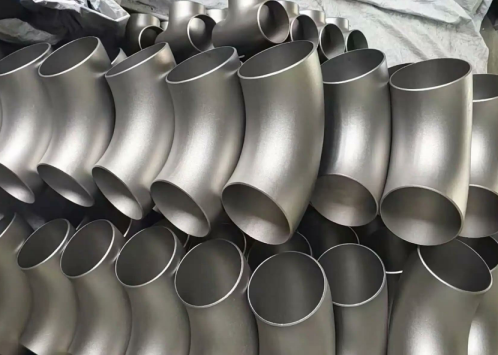
2. Specification Matching
The nominal diameter (DN) of the 45 degree elbow should be consistent with the pipeline to avoid leakage or flow loss due to dimensional deviations. Wall thickness parameters should also be considered; thicker elbows should be selected for high-pressure environments to ensure safety.
3. Connection Method
Common connection methods include welding, threaded connection, and flange connection. Welded elbows offer good sealing but are difficult to disassemble; threaded connections are suitable for small-diameter, low-pressure pipelines; flange connections facilitate maintenance but are more expensive. A trade-off must be made based on actual needs.
45-degree Elbow Installation Precautions:
1. Space Layout Planning: The angle design of a 45 degree elbow reduces the space occupied when the pipeline turns, but the installation location must be calculated in advance. It is recommended to use 3D modeling software to simulate the pipeline route to avoid interference with other equipment.
2. Welding Process Control: If welding is used, ensure the weld joint is smooth and free of impurities. For carbon steel elbows, the surface oxide layer should be removed before welding; for stainless steel elbows, inert gas shielded welding should be used to prevent intergranular corrosion. A pressure test must be performed after welding to confirm there are no leaks.
3. Support and Fixing: Elbows are susceptible to impact forces due to changes in fluid direction; supports should be added nearby. The support spacing should not exceed 10 times the pipe diameter; in areas with significant vibration, vibration damping pads can be added.
Common Problems and Solutions:
1. Leakage Problems: Leaks are often caused by improper installation or material aging. Prioritize checking the integrity of the sealing surfaces. Apply sealing tape to threaded connections; tighten flange bolts evenly. If cracks appear in the elbow body, replace it immediately.
2. Excessive Fluid Resistance: While 45 degree elbows have lower resistance than 90° elbows, pressure drop can still occur if the flow velocity is too high. This can be improved by increasing the elbow's radius of curvature or reducing the flow velocity. For long-term operating systems, regularly cleaning deposits from the pipe walls can also reduce resistance.
3. Vibration and Noise: Fluid impact on the elbow's inner wall can cause vibration. Solutions include: installing a buffer section downstream of the elbow, using rubber flexible connections to absorb vibration, or adjusting the pump speed to avoid resonant frequencies.
Maintenance and Life Extension Recommendations:
1. Regular Inspection: Inspect the elbow's appearance and connections every six months, focusing on signs of rust, deformation, or leakage. Shorten the inspection cycle in high-temperature and high-pressure environments.
2. Corrosion Prevention: Metal elbows installed outdoors should be coated with anti-rust paint. In chemical environments, consider plastic or rubber lining. Plastic elbows should be kept away from direct sunlight to prevent aging.
3. Spare Parts Management Spare parts should be stocked for elbows in critical locations. It is recommended to choose the same brand and specifications as the original parts to ensure compatibility in case of emergency replacement.
Conclusion:
The selection of 45 degree elbows requires comprehensive consideration of materials, specifications, and connection methods to match actual working conditions. During installation, attention should be paid to welding quality, spatial layout, and support fixation; avoiding later problems; regular maintenance and targeted solutions to leakage and resistance issues can significantly improve system stability.
Read more: Carbon Steel Pipe Fittings VS. Stainless Steel Pipe Fittings