


When moving steel pipes, prepare the packaging in advance and follow standardized loading and transport operations. Scratches on steel pipes can come from lifting tools, contact between pipes and movement during transport. This guide covers how to prevent each of them, from lifting to loading.
Pipes are usually loaded and unloaded by hoisting, and polished pipes need special attention. To prevent scratches, hoist with nylon belts, or with wire ropes fitted with spacers. Wire ropes must never contact the pipes directly. Before each lift, check that slings and spacers are clean and free of hard debris, so nothing abrasive is pressed against the pipe surface.
Apply force steadily when loading and unloading, and keep the pipes steady when lifting and lowering. Do not let them shake back and forth or from side to side: shaking makes pipes collide and squeeze each other, which causes wear and scratches on the surface. Load and unload in order, and do not force out the pipes at the bottom of a stack, which causes impact and abrasion.
If conditions permit, wrap each pipe individually and use simple spacers between pipes. This effectively prevents mutual wear. Some large pipes must be packaged separately and handled according to the relevant requirements.
Ordinary pipes are packed in bundles. Bundle only pipes of the same type and specification, and do not mix them. Loose bundles of different pipes damage each other. The weight of each bundle is also limited, mainly for the safety of transportation and loading.
Use the required number of straps on each bundle, together with clasps or similar tools, to secure the bundles. This prevents looseness, falling off and scratches caused by pipes knocking against each other. Where straps, slings or neighboring bundles touch the pipe surface, protective spacers help prevent scratches.
Some seamless pipe and stainless steel pipe should be packed in wooden or plastic boxes that meet the standards. Before packing, fill the boxes with foam and insulation material to avoid squeezing, and use plastic sheets to prevent moisture. Fix the boxes in place to prevent collision damage to the pipes.
For export shipments, see our guide to steel pipe export packaging for packing methods and shipping protection.
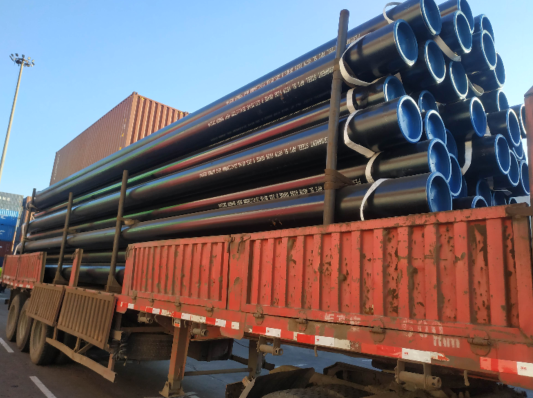
Before loading, clean the truck bed and make sure there are no hard objects such as stones or iron blocks that could scratch the pipes. Pad sleepers at the bottom of the truck bed and install spacers around it. Fix bundled pipes around the truck bed as well, so they cannot move back and forth and abrade each other during transport.
The measures above apply to all steel pipes. The surface only changes how much protection is added:
|
Area |
Check before moving |
|
Lifting equipment |
Nylon belts, or wire ropes fitted with spacers; no direct wire-rope contact with pipes; slings and spacers clean and undamaged; lifting and lowering steady, with no shaking. |
|
Surface protection |
Spacers where slings, straps and neighboring bundles touch the surface; polished and coated pipes wrapped or separated as required. |
|
Pipe separation |
Pipes of one type and specification per bundle; spacers or individual wrapping where conditions permit. |
|
Transport fixing |
Bundles tight, with the required straps and clasps; bundles fixed around the truck bed; boxes fixed in place. |
|
Before loading |
Truck bed cleaned of stones, iron blocks and other hard objects; sleepers padded and spacers installed around the truck bed. |
